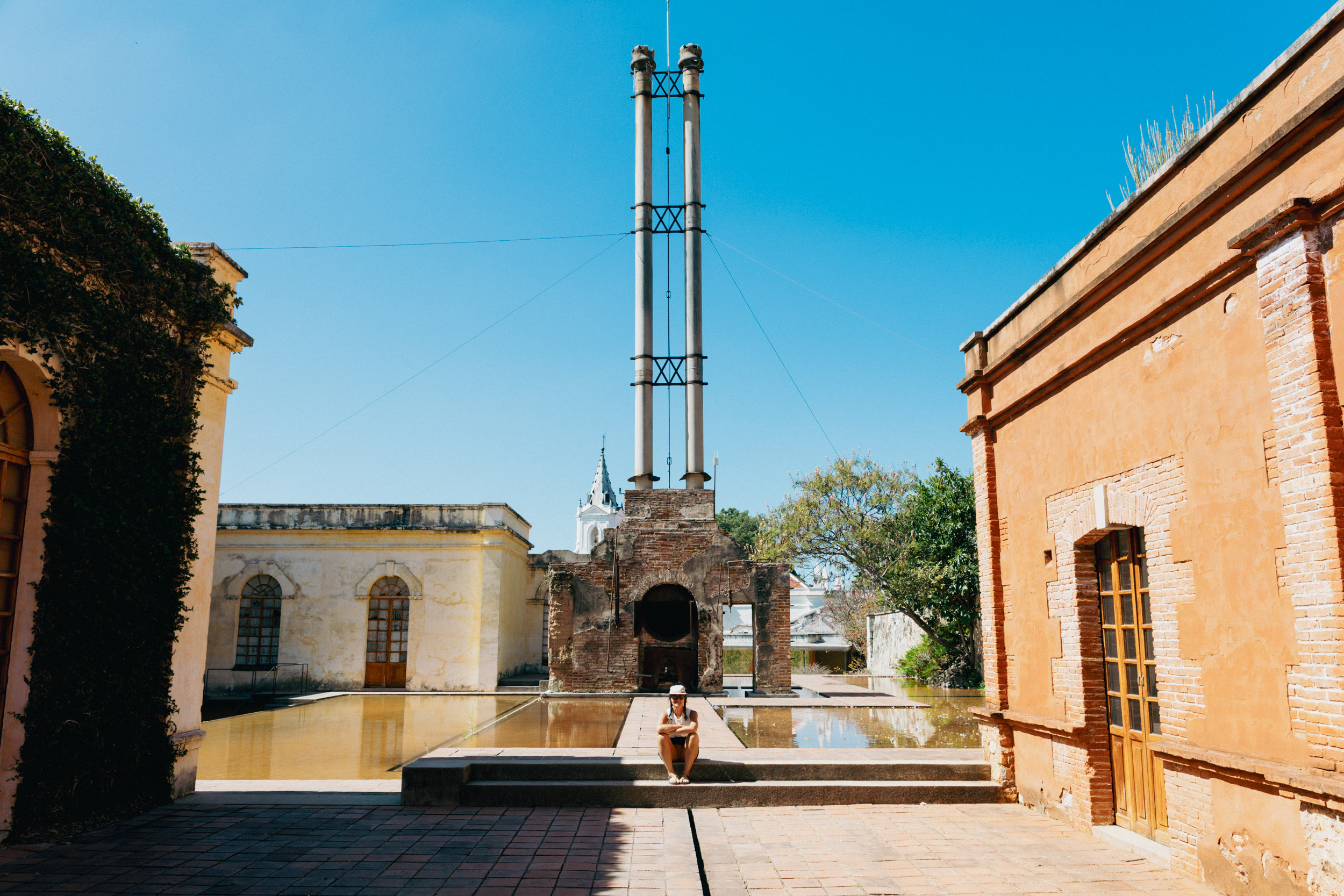
When I first moved to Oaxaca, I thought it would be a fun project to put together a locally printed pamphlet detailing ten or so dirt road day rides.
“Bicycle Routes and Botany in Oaxaca, Mexico: an Enthusiasts Guide” was the working title, and I figured it might include 10 enjoyable ‘gravel’ routes of different lengths and levels, with descriptions, hand-drawn maps, Emma’s beautiful botanical illustrations, some photos, and a link to RWGPS gpx files. They’d have been a section of food, of course, and perhaps a couple of overnighters that make use of the adobe brick cabañas in many of Oaxaca’s Centro Ecoturísticos – thus putting some pesos into the local economy, negating the need to haul heavy camping gear, and making these rides accessible to anyone renting ATBs locally, now that there’s a few options in town.
I don’t think that project is likely to happen… but for this winter, and in preparation for our travels through the mountains of Colombia, it’s at least given me the motivation to get out and re-ride the routes we thought would be nice to include.
These days, ever-increasing traffic in the city of Oaxaca dissuades me from crossing town too often. Unfortunately Oaxaca seems to be going through an SUV boom, with large cars replacing many of the cute and compact VW Beetles (Vochos, as they’re called here) that until relatively recently, made up the majority of vehicles on the street. Now’s not the time to grumble, but big cars in narrow thoroughfares do clog things up quite a bit… and things are getting back in Oaxaca.
This said, urban traffic on a Sunday remains relatively quiet in comparison to the rest of the week, which makes it the best day to get out to Etla, one of the valles centrales where we love to ride. In fact, this loop uses the almost-traffic free Libramento Norte initially – close to where we live – but it does wiggle its way back via a few busier, dustier roads in the south of town at the end. Relative to this time of year, the Sunday we rode it felt like a hot one too. At the end of a mostly quiet, low traffic route, those big, smelly, and noisy billows of diesel pumping out from beaten up old buses and “pipas” – the 10,000l trucks that deliver water throughout the city – always feel jarring, and especially so when you’re hungry! Plus, traffic woes were compounded by a two bus standoff a few blocks from the Zocalo, that had a cavalcade of motorbikers and car drivers honking their horns relentlessly and furiously to get by.
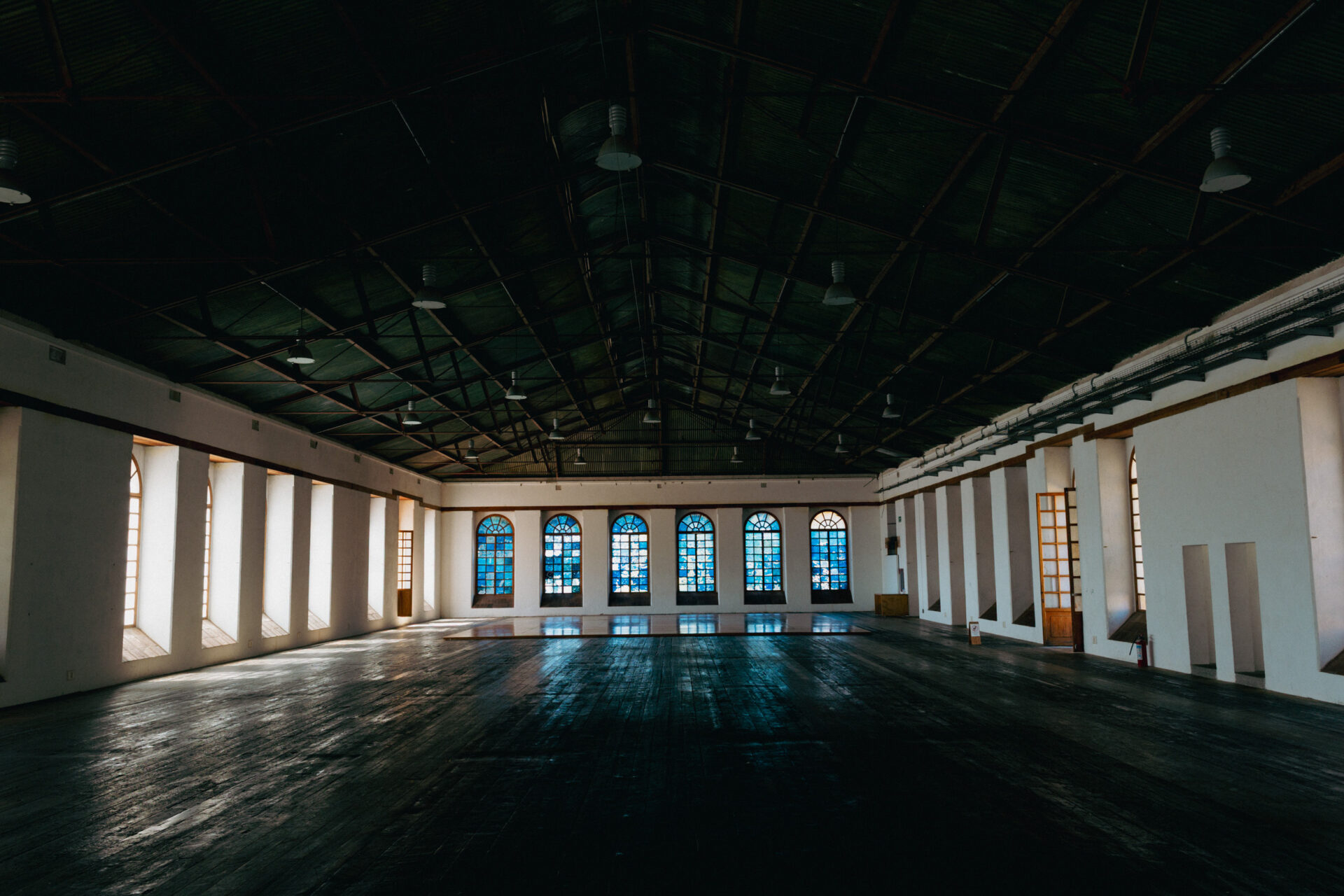
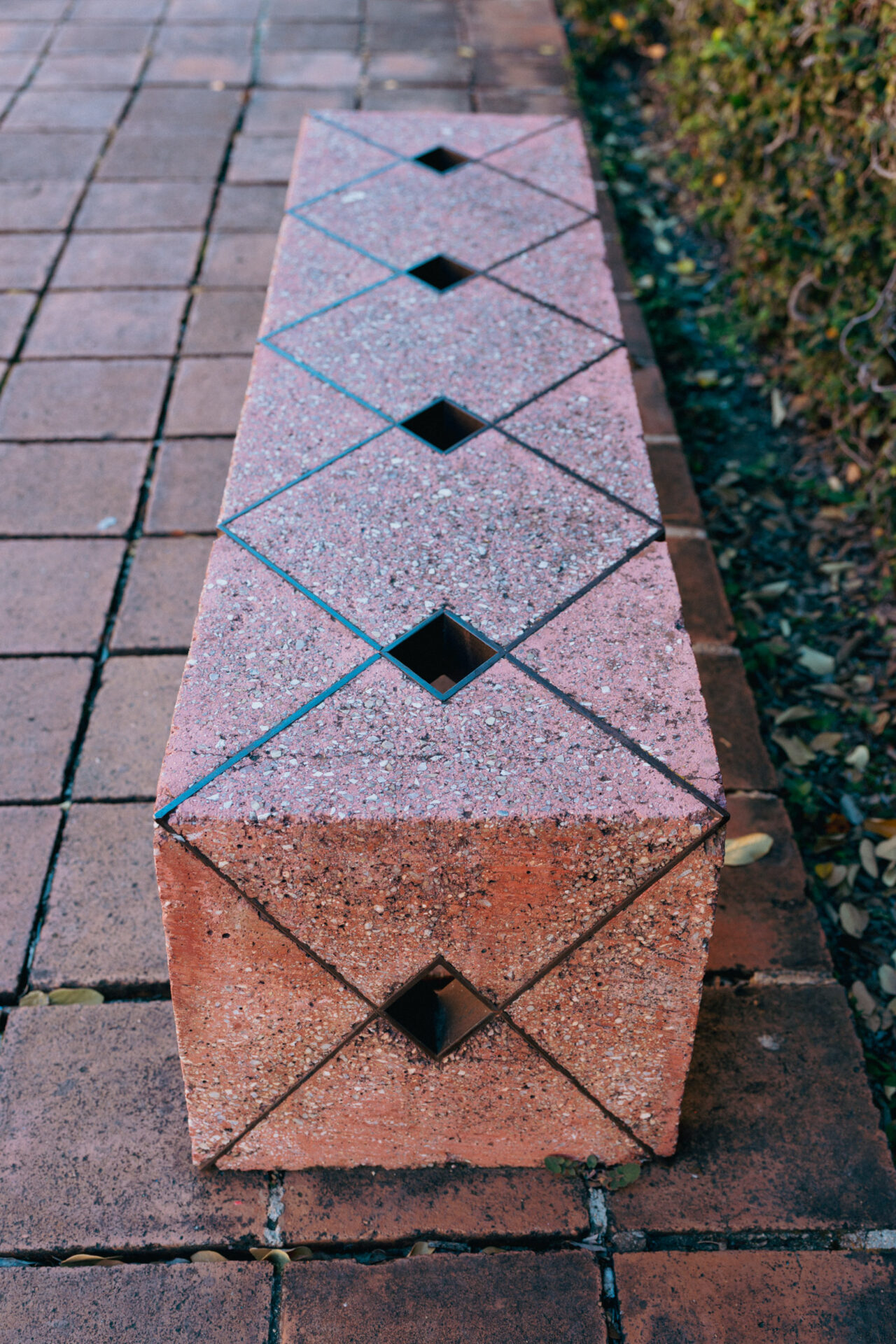
But back to the ride. The raison d’être for this route is mostly to visit a restored, 19th century textile factory that’s now home to an art space of world repute called CASA – you can read more about it below. Even though CASA is between exhibitions on this visit, the restoration of the building itself is beautiful and fascinating. I love the interplay of light and darkness, sunshine and shadow, that changes throughout the day. The detail in the overall finish is also stunning, right down to the intricate, inlaid stone benches that surround it, the potted cacti and succulents the dot its walkways, and the angular pools of shallow water that frame reflections of old machinery from bygone times.
The Oaxaca to Tehuacan railway component of this ride is an intriguing one too, especially if you enjoy looking out looking out for exposed railroads and signalling paraphernalia, clues to its past. I wish this train line was running today; it was closed in the early 2000s, having become squeezed of use by the construction of the interstate between Oaxaca and Puebla. We actually have a couple of bikepacking routes that trace it for some of its way – the Vuelta de Santiago Apoala and the Ojos de Cuicatlan (Sur).
Find a selection of ride pics and a few more words about Sunday’s outing below. They’re in no particular order, just the way I felt like laying them out in the SCRL app. There’s a Ride With GPS map and route description too, and you can find a link to other dirt road routes here, that may well have been included in this imaginary guide.
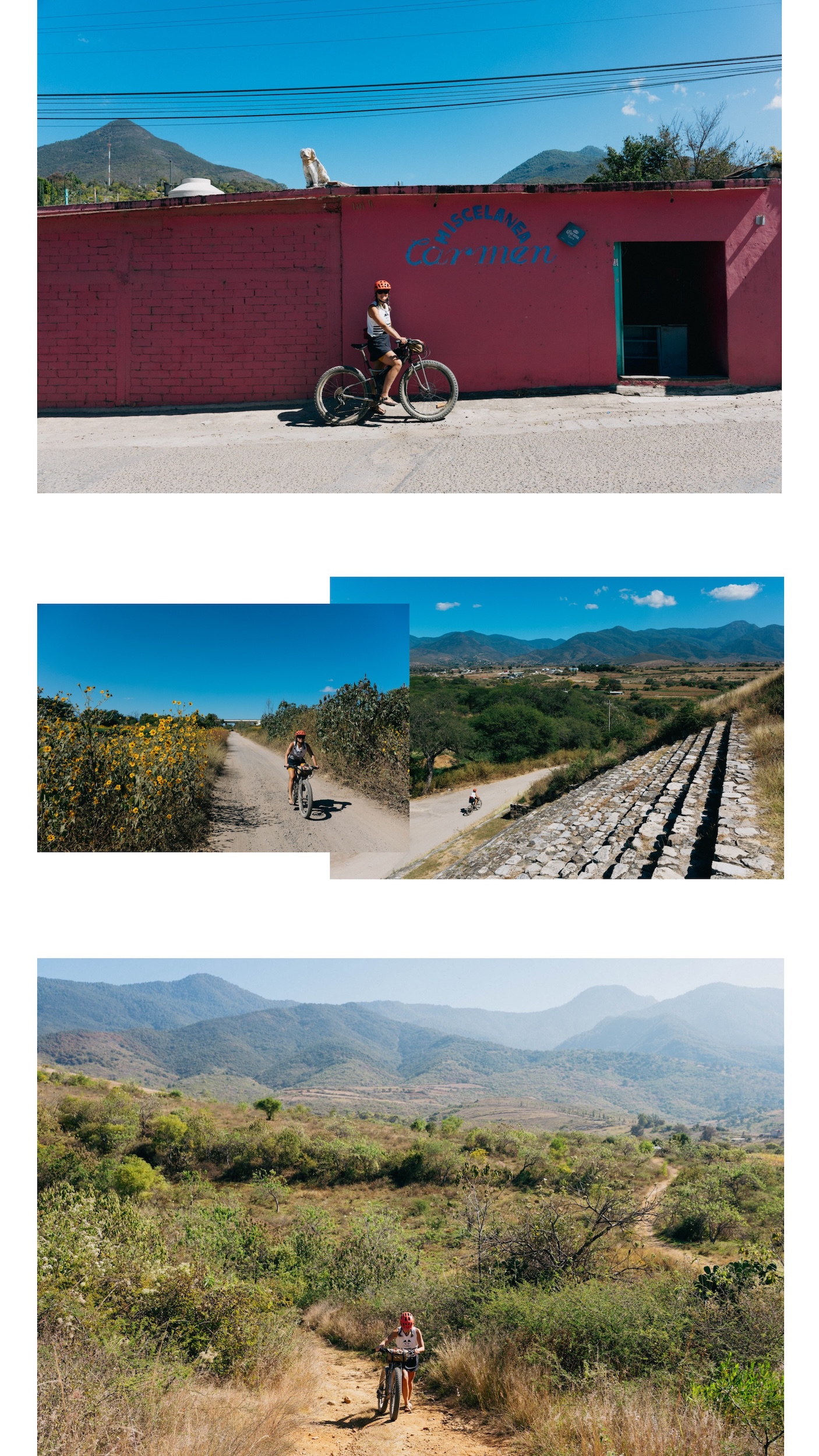
Above: Barking roof dogs are synonymous with Mexico and this stone statue is a fitting tribute, we thought. Below: That’s the Sierra Norte in the background, beyond fields of Mexican sunflowers. And in the middle, the steps of Mogote. Although it’s been largely left to its own devices, the Zapotec site is an important one, pre dating the capital of Monte Alban, and said to feature inscriptions from 500BC.
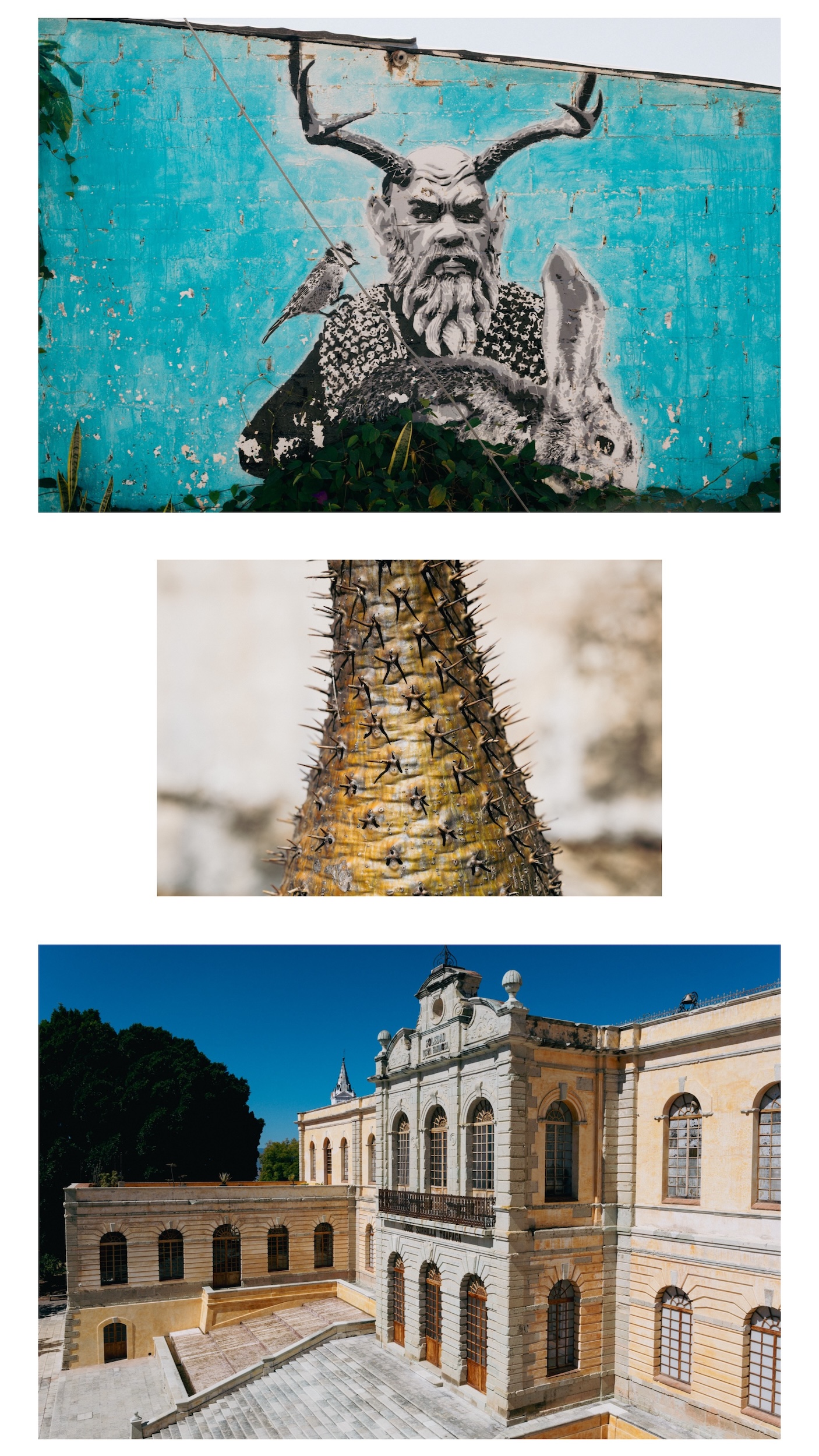
Founded by Francisco Toledo, the Mexican painter and sculptor, CASA is housed in a textile building from 1883, backed by the verdant mountains of the Sierra Norte. A visit here is often an unexpected highlight of any trip to Oaxaca, especially if you’re a fan of art and photography. The curated plants offer an extra textural treat, and the village itself is home to a number of striking murals.
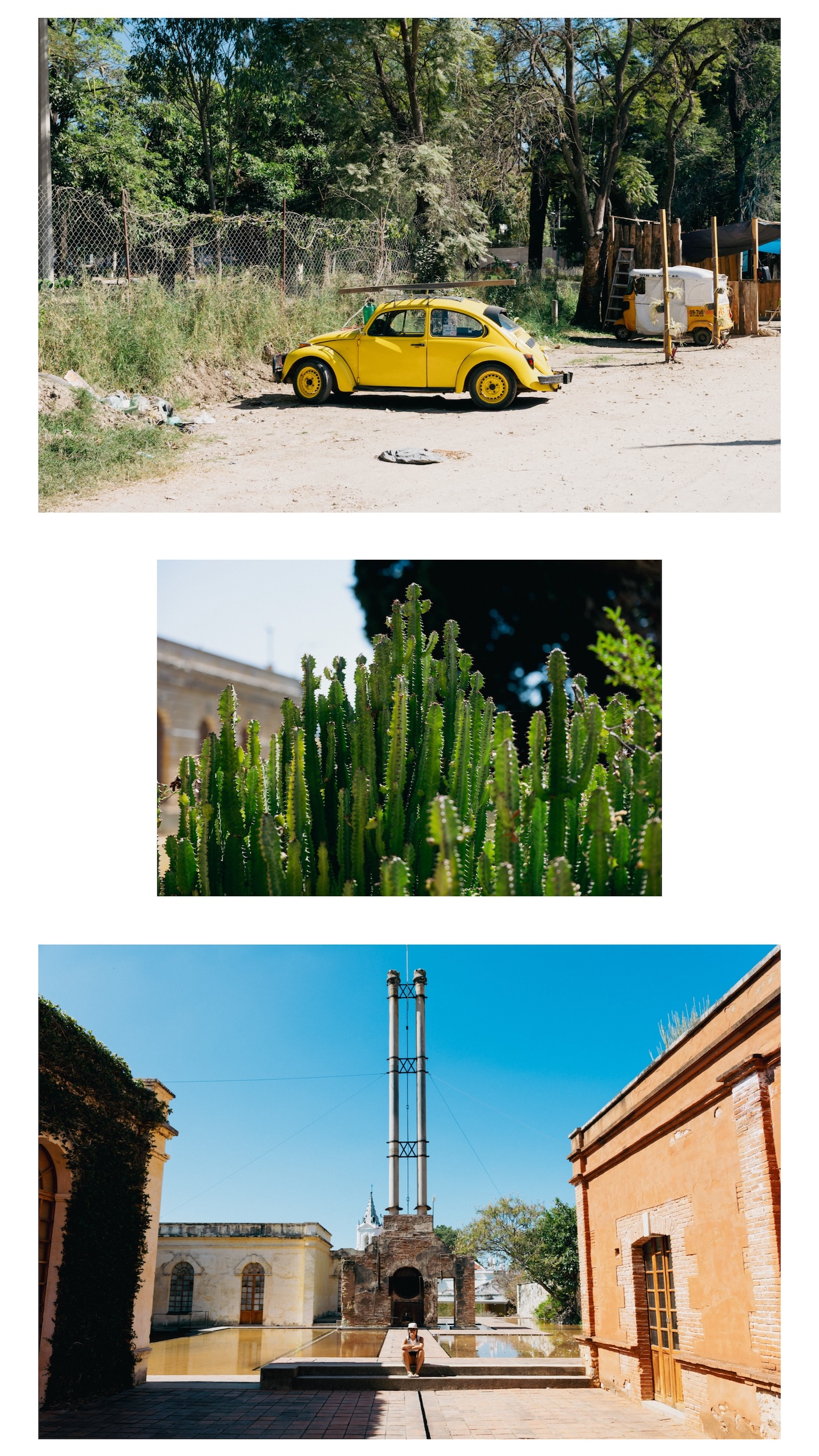
I love the reflecting pools of water behind CASA’s main building, and the way certain parts of the complex have been left exposed and distressed. Of course, we’re suckers for euphorbias and beetles…

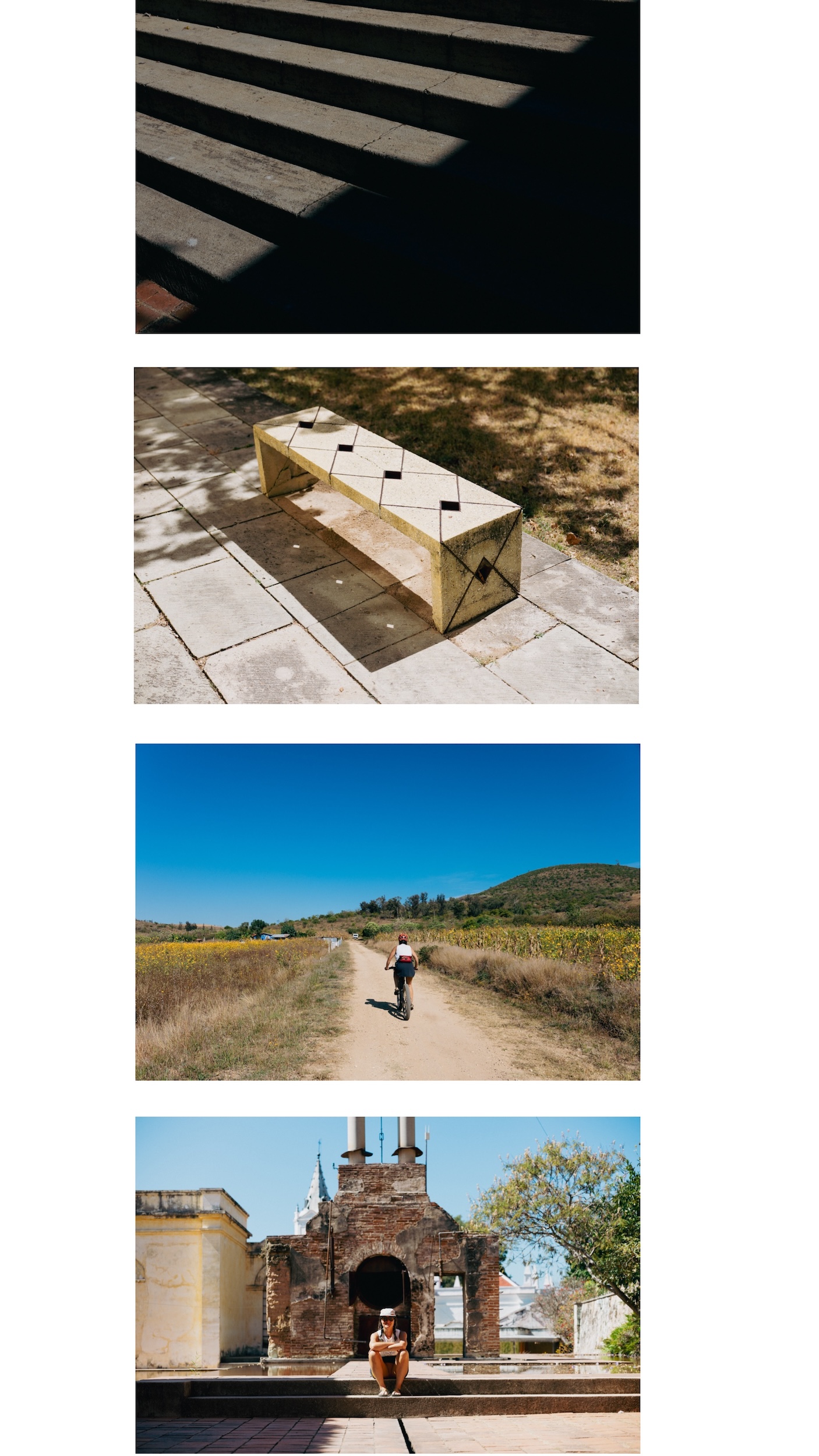
There’s so much interplay of light and shadow all around this complex…I love how sunshine beams through this inlaid bench, for instance.
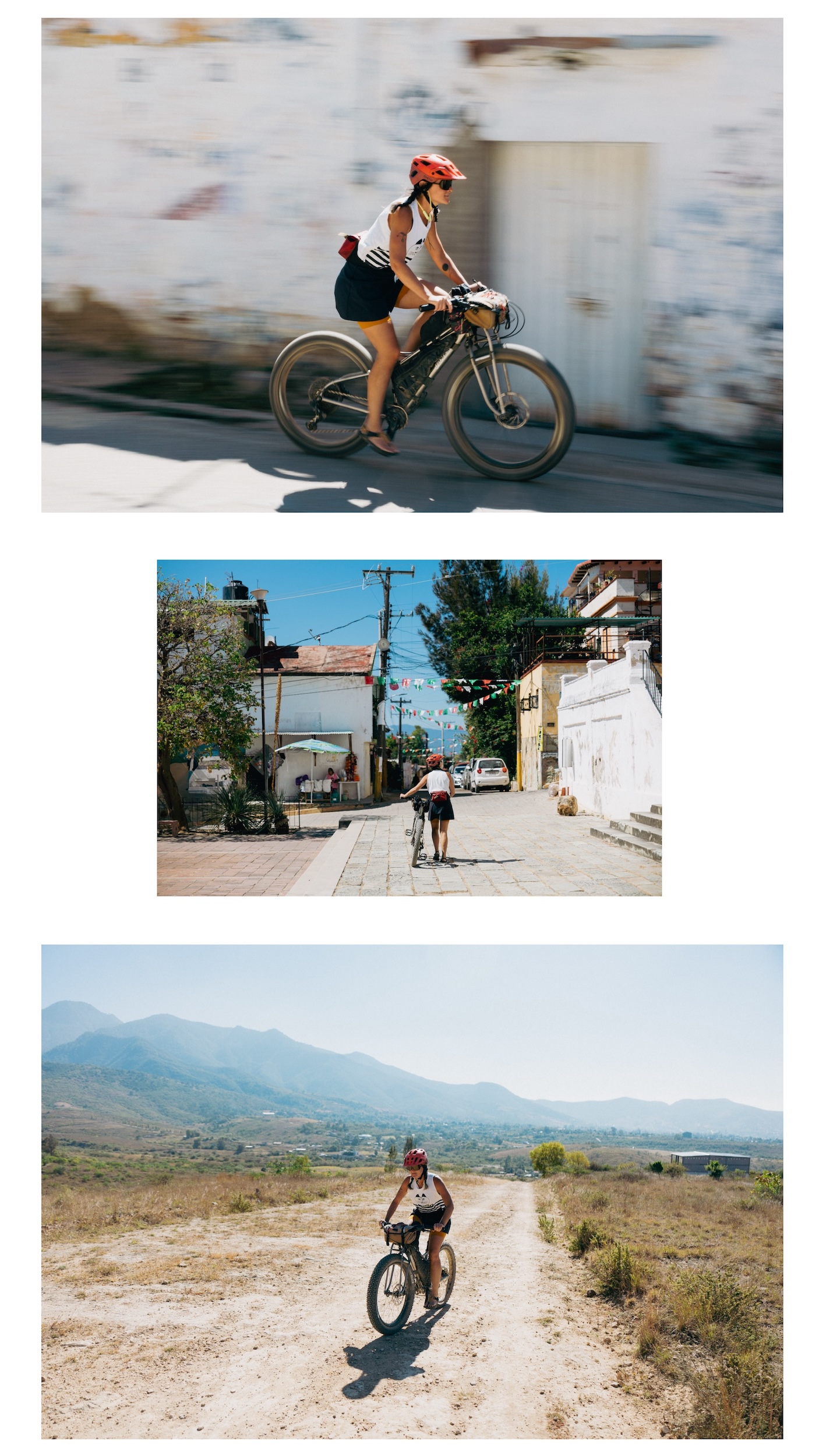
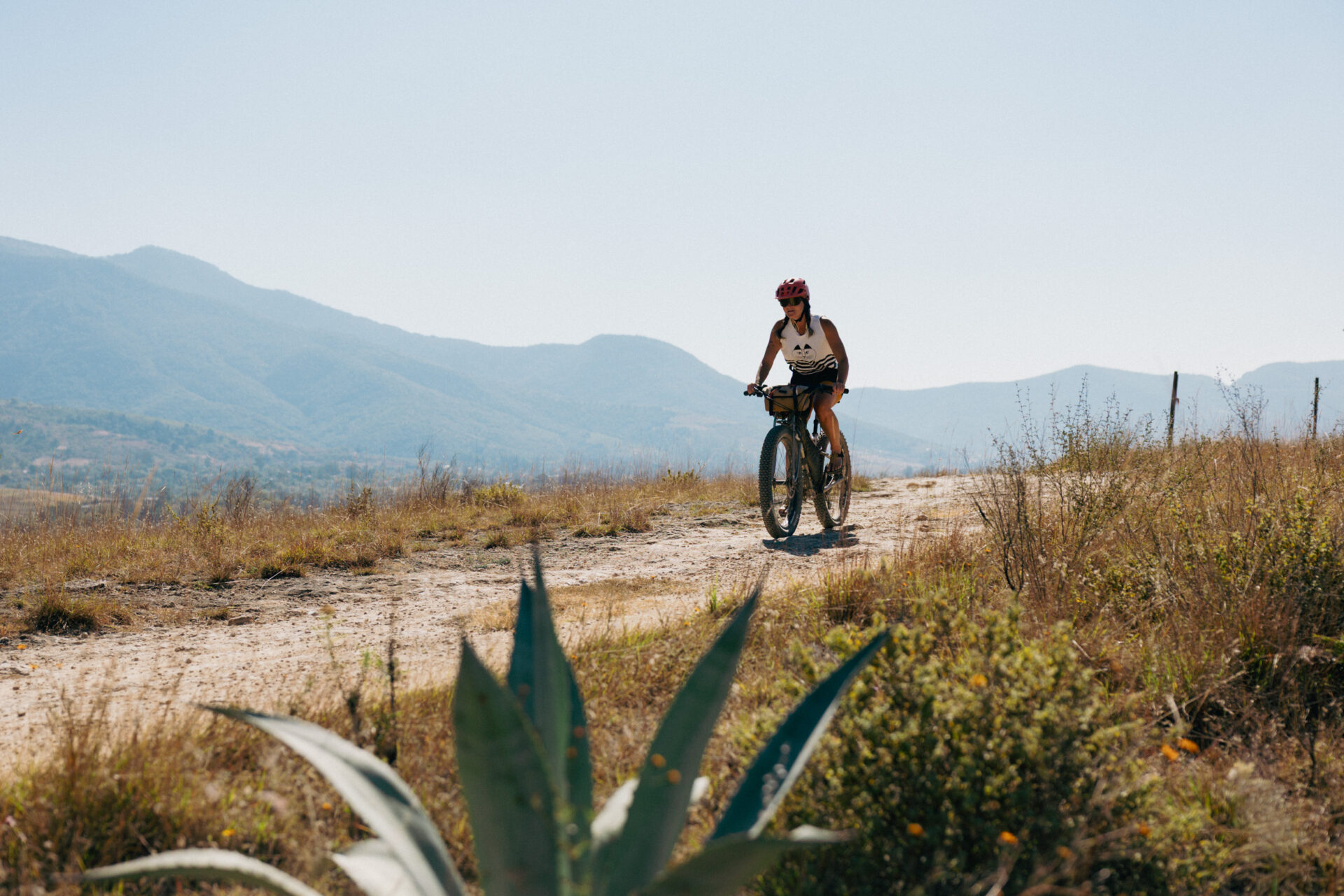
It was hot and hazy out there, even if the dry season has yet to really kick in… And speaking of art, although our bikes are function over form, we like to think they’re gratifying to look at too.

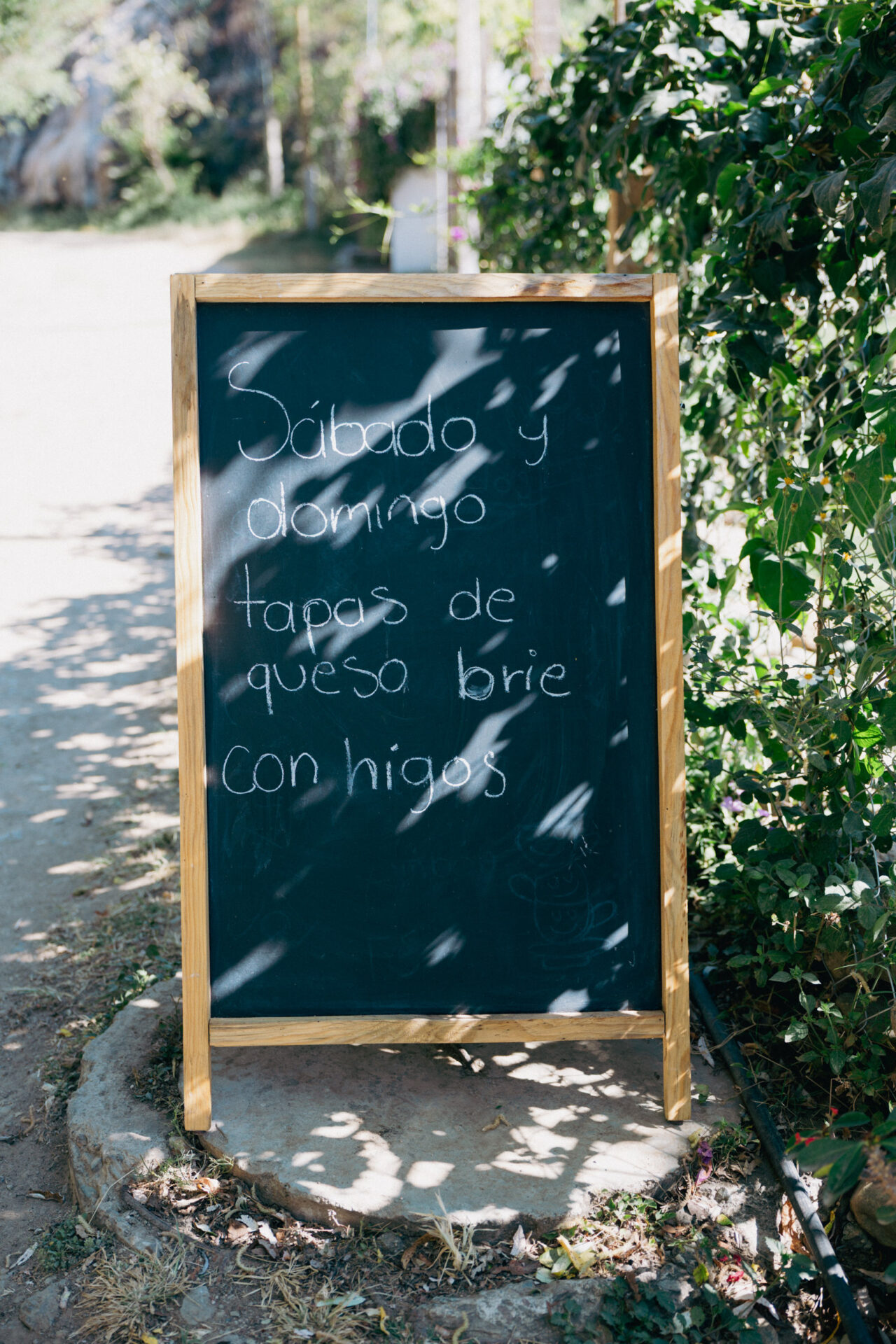
A day for iced coffee… San Agustín Etla has a number of cafes and eateries. Shout out to the new and quite lovely garden cafe, Piedra de Luna, which uses glass straws!
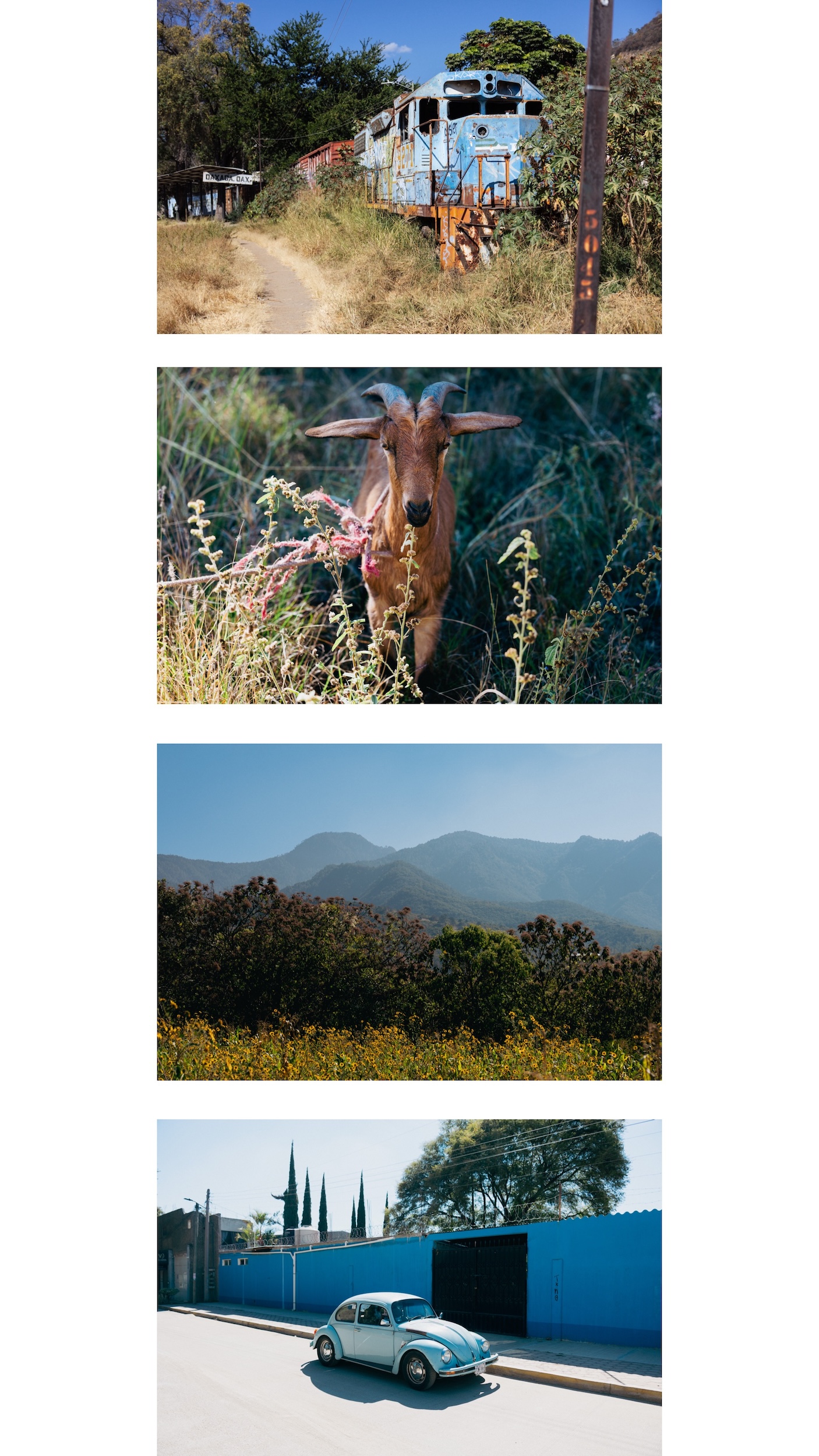
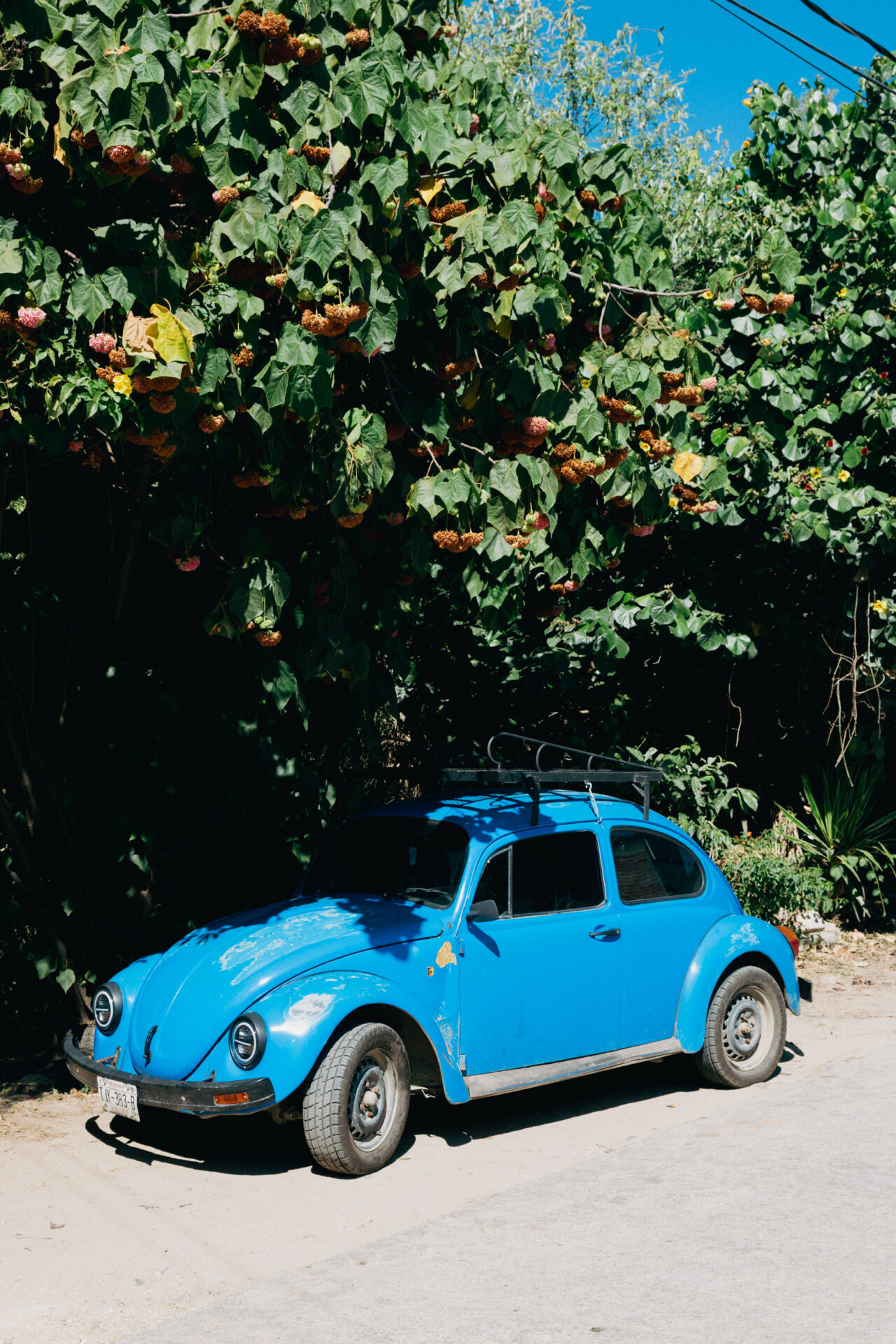
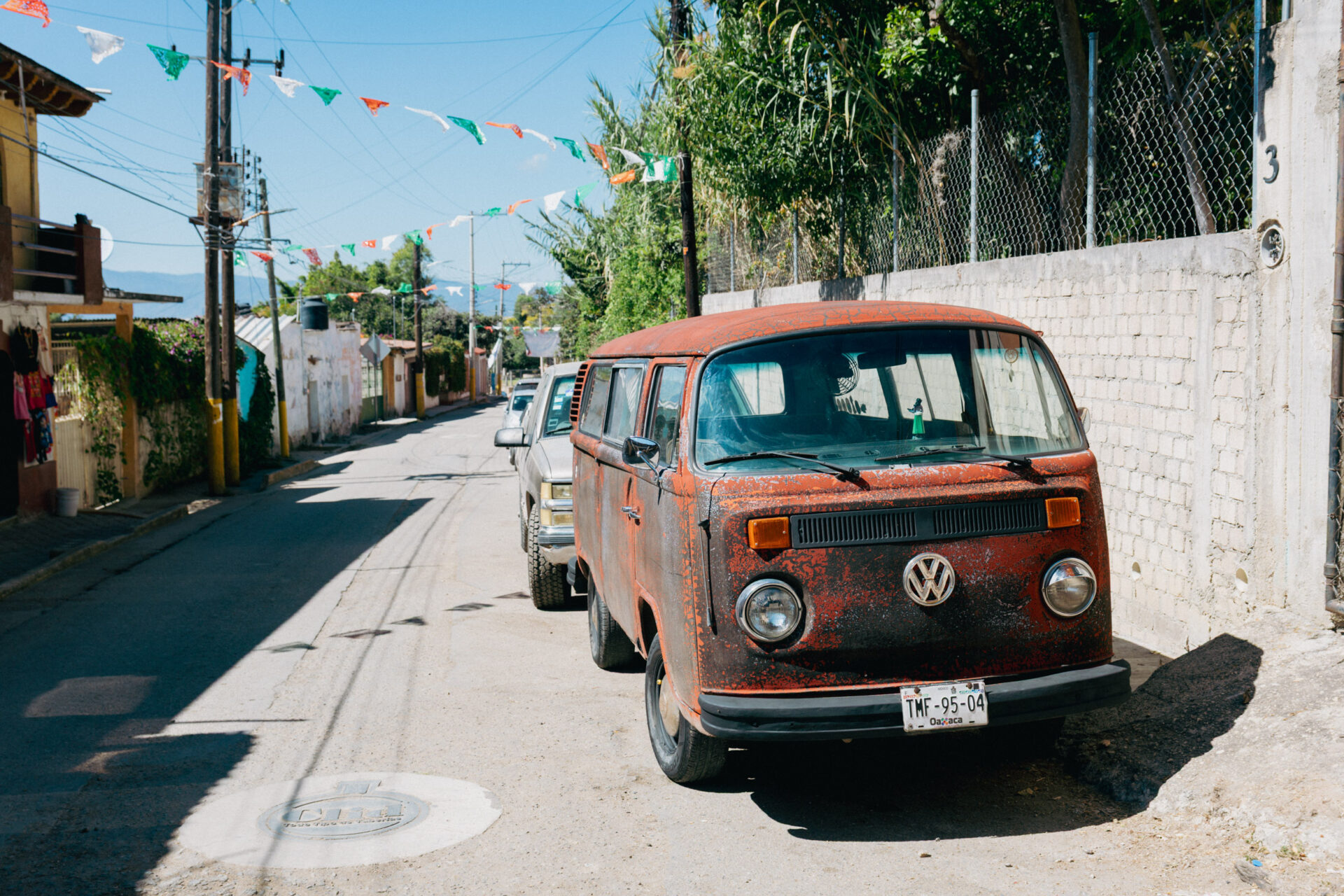
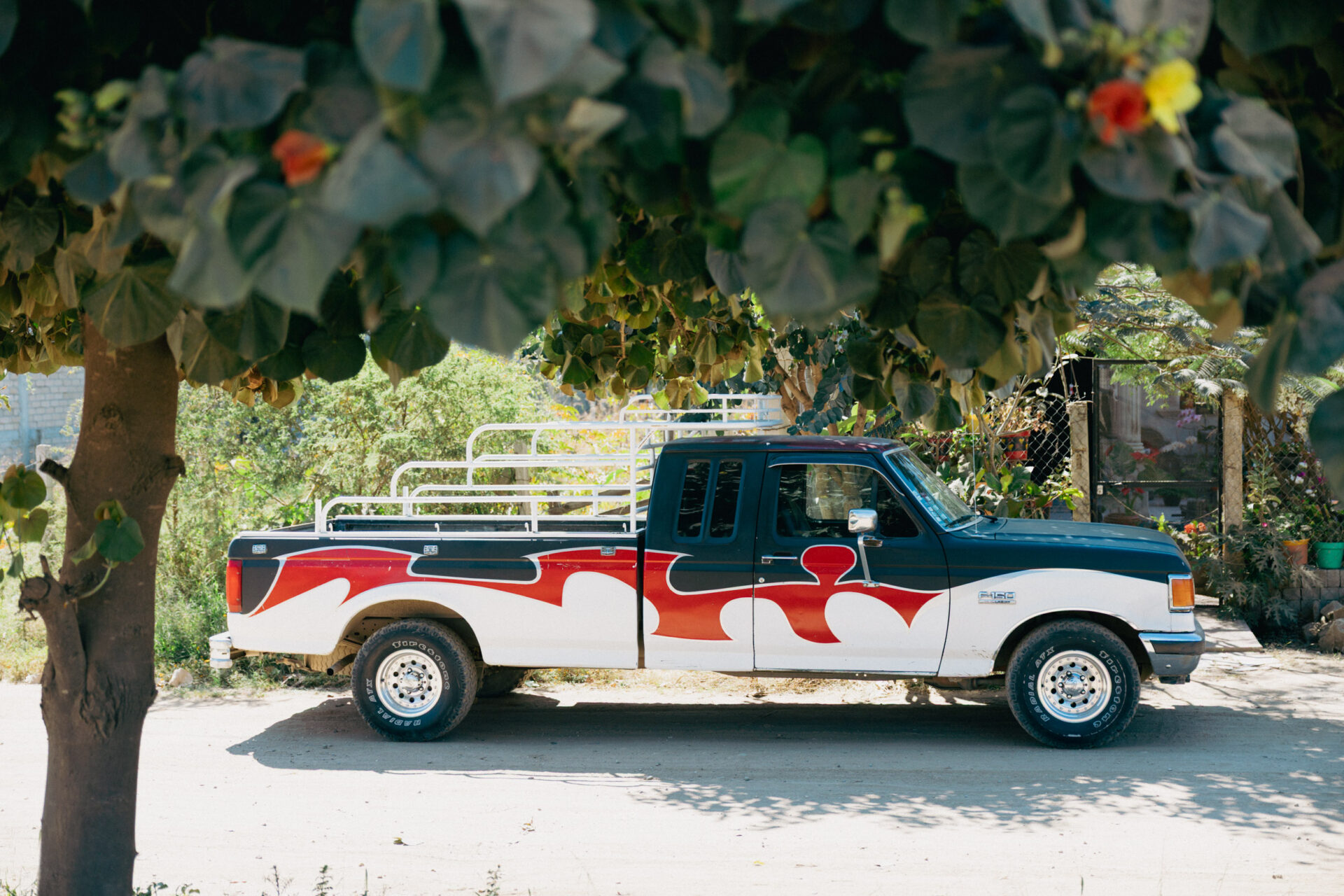
I suspect Oaxacans colour coordinate the parking of their Vichos. This example happens to match the old locomotive that we love to stop and photograph on every visit, lying overgrown at the terminus of the Oaxaca-Tehuacan railroad, where goats roam.
The Route
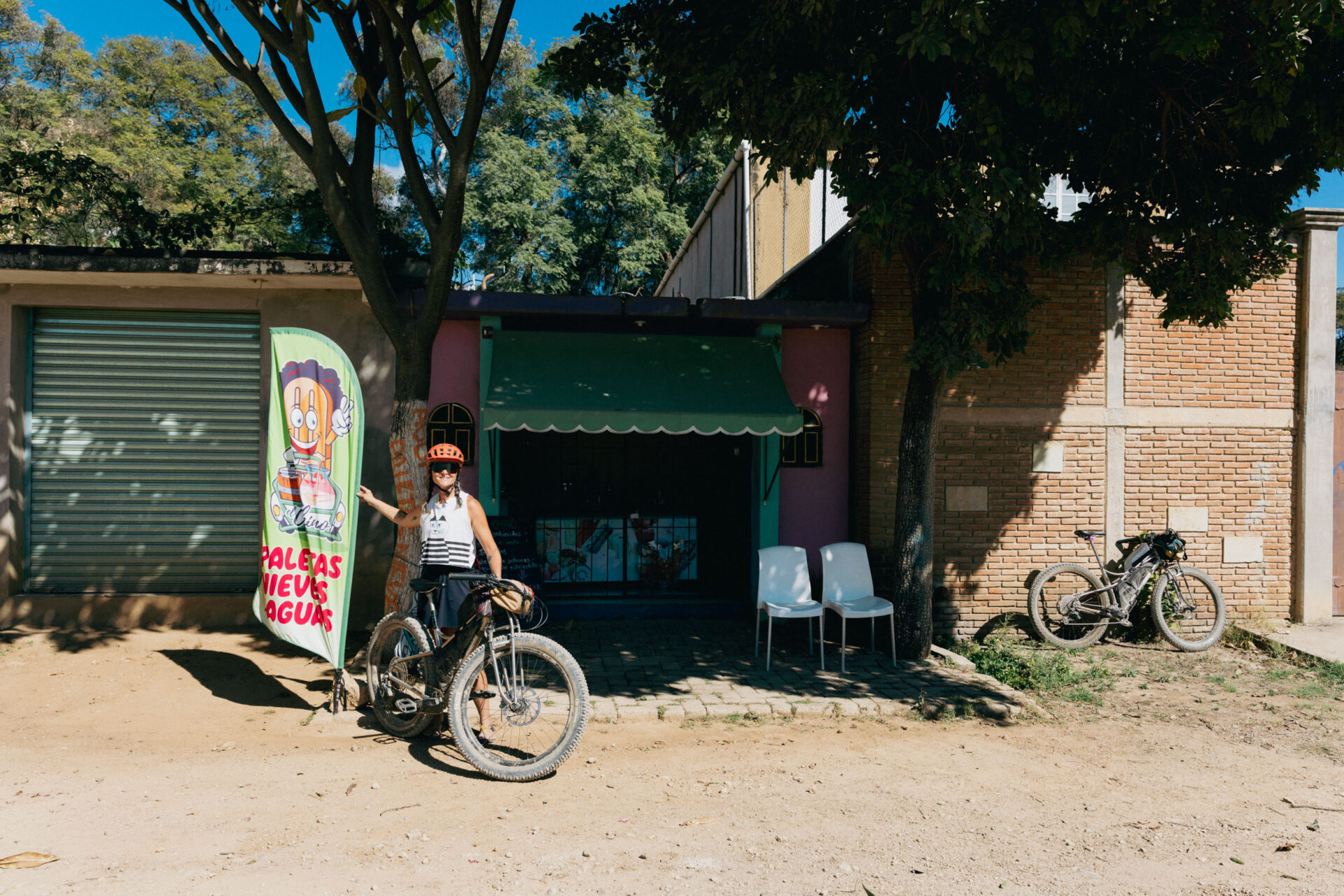
I’ve marked a few POIs on the map. They’re not exhaustive but do at least include Piedra de Luna, which has just been open for a few weeks, and our fav paletería along the railroad. Turns out, one of the owner’s sons absolutely loves the French language, even though he’s never been to France. As I speak French reasonably well, we had a pretty long chat while Emma and I munched on our paletas (coconut and pistachio); amazing how much it comes back after a bit, though I definitely jumbled in some Spanish words.
3hrs 30 min riding time, 47km, 880m of elevation gain (excluding a possible detour to La Mesita)
As mentioned, this all terrain ride takes you up and over the traffic-free Libramento Norte – an abandoned bypass – to Viguera, from where it’s primarily dirt all the way to San Agustín Etla. If you’re hankering for a bonus climb, a great view, and an outdoor art space to wander around, consider an out and back to the Centro Ecuturístico San Pablo La Mesita – the POI is on the map.
As for San Agustin, it’s a very pretty little town with more of a tropical, well watered vibe than other parts of the Etla valley, especially with all its thickets of carrizo. The town is well know for its fabulous San Agustín Etla Art Centre (CASA) housed in a former textile factory from 1883. Reopened in 2006, the building has been immaculately renovated and is now home to a quite breathtaking gallery space, complete with world-class, rotating exhibitions, many of which are of a photographic persuasion.
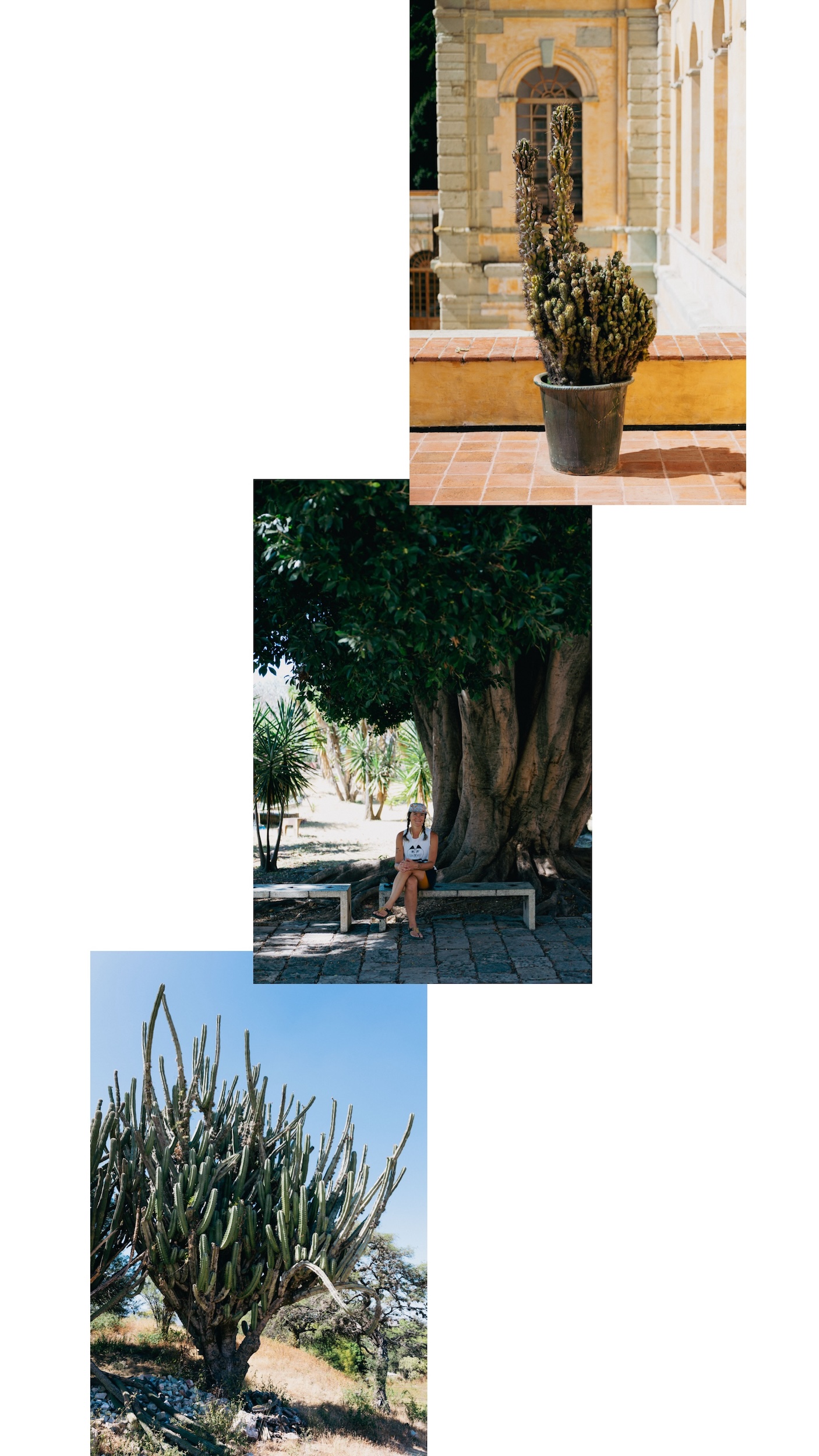
This old organ cacti has been presiding over Mogote for who knows how long. I bet that ficus is pretty old too. The top image is another fine euphorbia at CASA.
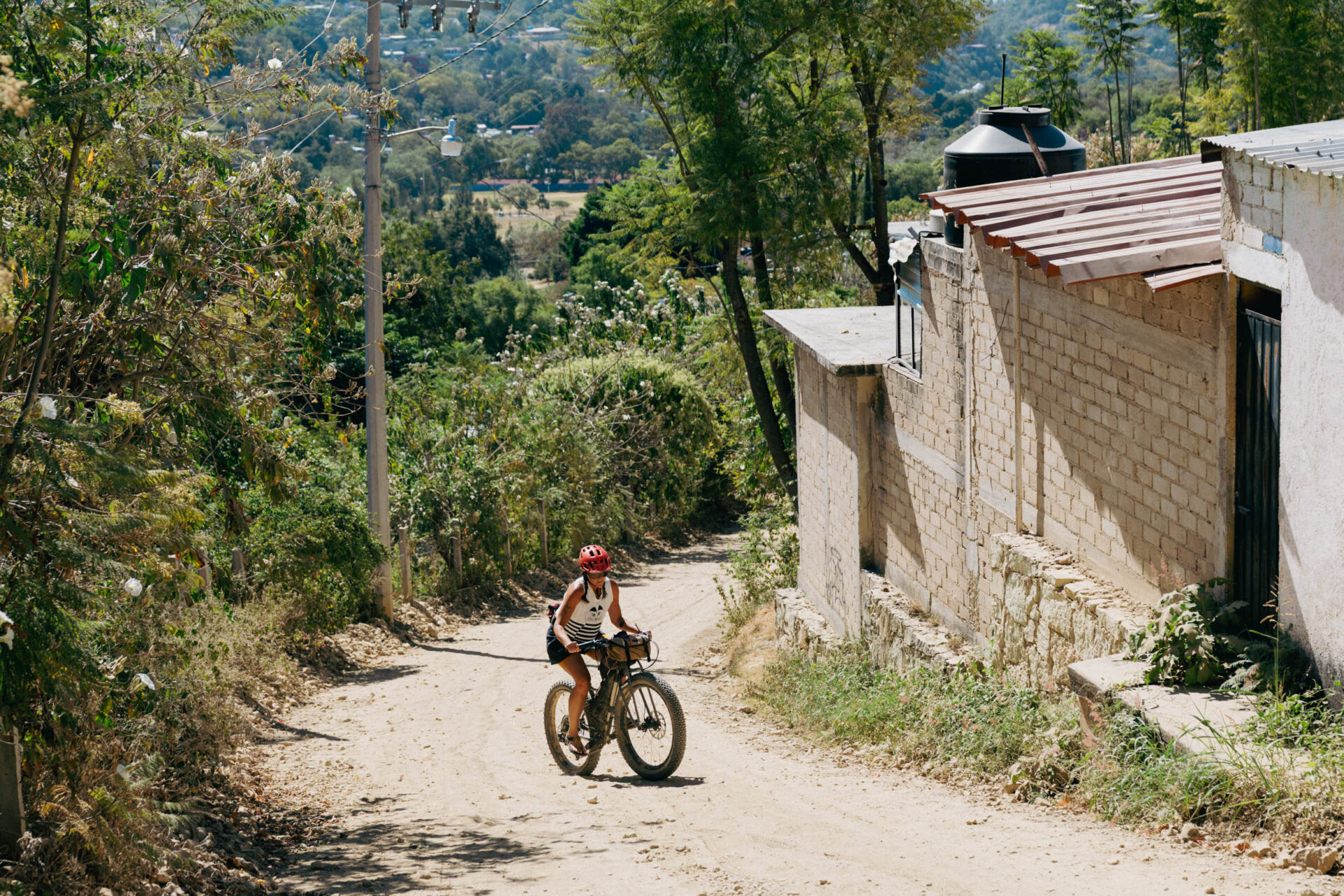
The return leg to Oaxaca is flatter but not as scenic, though it includes the often overlooked Mogoté archeological site, and it traces the old Tehuacan railway line for much of the way. Things get a bit busier and scruffier as you close in on town, with a final bus gauntlet to run back to centro.
You can also ride a long version of this route over two days – Excursiones en Etla – should you want to visit interesting spots along the way, like the paper mill, and the pottery workshops of Atzumpa. I rode it with Sage a while back, and there’s a blog post here with lots more details.
Note that this day ride crosses an area that has ome security concerns – read more here – so it’s best ridden in a group, especially if you’re not familiar with the area.



That’s it for now. Thanks for reading!

Bill
1 December 2025 at 9:45 pm
So many cool images. Oaxaca looks empty and serene despite the congestion you write about.
Cass
4 December 2025 at 12:59 pm
Thanks!
At this time of year, rural Oaxaca is quite lovely for riding, and many people use bicycles for transportation within the surrounding valley villages – from curvy bar single speeds with double top tubes to cool cargo trikes. It’s the city that’s somewhat hectic and stressful these days, so less conducive to stopping and taking photos!