Herein, find thought nuggets for those planning a bikepacking trip to Oaxaca – advice on following routes, camping beta, on-the-road hydration tactics, city water awareness, safety, appropriate bikes to bring on a trip to Oaxaca, and more. I’m no longer based in Oaxaca so if any of the information slips out of date, just drop a note in the comments, and I’ll update this page when I get the chance. Thanks!
Following Established Bikepacking Routes and General Route-finding in Oaxaca
- Many of the dirt roads in the Oaxacan backcountry see little travel – a wave, a friendly greeting, and a roadside chat go a long way within the small communities that you’ll be passing through. I recommend slowing down and setting your sights on a more modest itinerary than you might usually aspire to, especially when striking out into less travelled terrain. These unique and personal encounters can become highlights of riding in Oaxaca, so allow time for them to unfold!
- Following gpx files: It’s worth remembering that much of the riding here is on ejido (community) land. In the mountains especially, villages are often run autonomously by close knit indigenous communities, centred around a set of laws known as “usos y costumbres” that help protect valuable resources like forests and water. In many lesser travelled parts of the state, introducing yourself and explaining what you are up to is the culturally appropriate thing to do, as well as opening doors to richer, more personal experiences. “Con permiso podemos pasar” is a polite expression that shows respect to those who live there and whose land you are crossing, as does opening conversations with the general greetings, ‘buenas dias and ‘buenas tardes’. Oaxaca has more municipalities governed by “usos y costumbres” than anywhere else in Mexico, and as we spend more time in the state, we’re becoming ever more aware of its impact, both subtle and overt, on bike touring here. In sharing routes and ideas with visitors to the state, we’d love everyone to be on the same page in understanding this. Bear in mind that issues can arise between neighbouring communities, be they historic or temporary, causing unexpected road closures or regional tension. When in doubt, always check in with the Municipio in a village or town, ask for permission to ride through an area, pay any fees that are required (you’ll likely be given a receipt, otherwise ask for name), and be sure to respect the wishes of any local landowners. Be prepared to detour if need be, as inconvenient as it might seem.
- Downloading regional maps: For the reasons listed above, be sure to download the surrounding maps of any route you’re following or have created, should you need to detour away from a gpx file. I’m a fan of the Mapout app as it’s easy to use, quick to download for offline use, and includes many dirt roads in the area. Unfortunately, it’s only available for iPhones. Maps.me is another good general mapping app into which you can load gpx files, in case your plans change on the fly.
- Original route finding: As mentioned, much of the land in Oaxaca is community-owned. This means that whilst roads may exist on the ground or on Googlemaps, they aren’t always ‘public’. In some areas, you’ll need to request permission, generally gained at the local Municipio. This is especially the case in the Sierra Norte and the Sierra Sur, where indigenous communities are close knit and can be wary of outsiders. Introduce yourself and explain what you are doing, be flexible with your itinerary, and avoid certain villages if it’s recommended to you. Whilst consulting heat maps can be useful, be aware that there can be a lot of nuances to riding here.
- Having a basic grasp of Spanish will make all the difference to your time in backcountry Oaxaca, as many of the places you’ll ride see few foreign visitors. Consider spending a few days or a week enjoying morning day rides and taking Spanish lessons in the afternoons, before embarking on a bigger tour. You can find some suggested day rides, all of which start in the city, here and here.
- Cell service: Depending on where you are headed, this can be very sporadic outside of main towns and cities, as is often only found along high ridges or at the top of passes. Be sure to download any important info you need before heading out on your trip. Some villages sell ‘fichas’ for internet access, but speeds and connections can be patchy.



When To Bike in Oaxaca


- Best time of year: Oaxaca is a popular holiday destination throughout the year, with November to February considered the high season for overseas visitors. Bear in mind that during the dry season (November to May), dirt roads become increasingly dusty as the months progress, streams can run dry, and temperatures soar, especially in the Valles Centrales and down by the coast. By March and April, it’s sizzling hot and the landscape becomes increasingly dull and brown which makes it especially challenging for bike touring – I’d recommend avoiding those months if possible, or otherwise concentrating your explorations in the mountains. In contrast, the rainy season (mid-May to October) brings lush countryside and much more bearable midday riding temperatures, but expect heavy rain in the afternoon and nightly downpours. Good waterproofs or a poncho are a must. Thankfully, rain in the mountains of Oaxaca is rarely an all-day affair, unless there’s a storm system lingering on the Pacific coast or the Gulf of Mexico, in which case it can be rainy and overcast for a few days. All things considered, mid-October through January are probably my favourite times to ride here, as the landscape is still green, the heaviest rains have passed, and the temperatures aren’t yet oppressive. Within these months, November is perhaps the sweet post, and allows you to tie in a bikepacking trip with experiencing Día de Muertos (Nov 1-2). If this idea tempts you, be sure to book accommodation in advance as it’s especially busy over the week surrounding these dates (see below for more details).
- Dry season tips: Be prepared for high daytime temperatures (often topping out at 35c/95f in the city), that can make climbing particularly challenging, and humidity also increases towards the coast. Early starts are recommended, as is extra water capacity – at least 4-5 litres, depending on the route and time of year – and midday siestas are the way to go. A bandana can be useful, as the dirt roads can be very dusty when traffic passes, especially once the dry season is in full swing. I’d suggest concentrating your adventures in the high country during the dry season, where it’s considerably cooler and there’s even a chance of rainfall. In terms of waterproofing, it’s still worth packing a lightweight waterproof jacket, as storms do roll in.
- Rainy season tips: We’re big poncho fans when camping in the rainy season, as they can double up for protecting your bike and its drivetrain from rusting at night. For the most part, the mountains drain well, but we’ve marked potential mud-clay trouble spots on routes that stick to the valleys. Rule of thumb: if you’re cycling through an area famous for pottery, it’s probably going to be bad! Storm systems aside, rains mostly come in the late afternoon or at night, so they don’t tend to get in the way of enjoying your days in the saddle. The rainy season has its charms, including epic skies, storm racing, and the chance to forage for mushrooms. Mushrooms are most plentiful from July to September, though the season can extend into October and even November too. Check out Oaxacan mushroom guru Osvaldo Sandoval’s Instagram for ideas and inspiration. The mountains can feel cold in the rainy season due to ambient humidity, so I recommend packing some extra layers too.
- El Día de Muertos: Consider timing your trip around Oaxaca’s famous festival and ceremony, held in early November. Book accommodation in advance though, as the city is especially busy at that time of year and in the week leading up to it. Nearby Mitla and San Agustín Etla and also known to be interesting destinations for El Día de Muertos, and are less commercialised than the city scene.


Water in Oaxaca and Hydration Tactics on the Road
- (Lack of) water in the city: Oaxaca’s population has far outgrown its infrastructure and the city has been experiencing a water crisis for a number of years. It’s very common for household to run out of their allotted city and you’ll often see big water trucks – pipas – deliver additional, paid water across town to make up for the shortfall. This water is often drawn from dwindling aquifers and it’s a situation that’s greatly exasperated by tourism and the thirsty hotel industry, so be extra mindful of your water use when using toilets and showers. Read this report for more info, whilst this podcast, by Today Explained, concerns similar woes in Mexico City. Lastly, this is a very informative video about the impact of tourism on local water supply in Oaxaca, and generally on gentrification.
- Tap water in the city isn’t for drinking; most hotels and Air B&Bs will supply water from big, reusable garrafones, or use a filtration system. Outside of the city, it’s always worth asking; in many mountain villages, the water is considered clean, and there are a number of springs in the Sierra Norte and the Sierra Sur which we drink from unfiltered. This said, if you’re coming from afar, it’s best to err on the side of caution and filter or boil water if in any doubt.
- To avoid buying single-use plastics that are invariably buried or burned, your best bet is to allow for 4-6l of H20 carrying capacity on your bike, depending on the time of year, which you can load up on in the morning. Garrafones are generic, 20l water bottles available in many small stores throughout Mexico, and are re-filled rather than recycled. You won’t need to buy the bottle itself – just explain to the storekeeper that it’s only the water that you’ll be needing and that you’ll be returning the bottle straight away – it should cost between 18-30 pesos per garrafone. This tactic works best with couples or as a group, but even as a solo rider, it’s both more eco-friendly and economical than buying smaller plastic bottles. You can also leave any leftover water in the bottle for the storekeeper. You can source clean water in the mountains – use your filter to be on the safe side.
- If you’re in a restaurant, you can ask to top up your bottles – leave some extra pesos if you’re filling a number of them, as this water will likely come from a garrafone.
- A lunchtime, we’ll often order a big jarra de agua fresca (a fresh, watery juice), to keep us hydrated. Or, we’ll opt for a soft drink from a glass bottle where possible, as these are also reused.
- Bring some rehydration salts with you, especially in the dry season months when climbing into the mountains can be a sweatfest.
- I pack a 3L Hydrapak within my framebag and a water bottle or two on my handlebars, which keeps everything clean. Nalgene/Klean Canteens work well under the downtube but they do tend to get dusty and dirty.
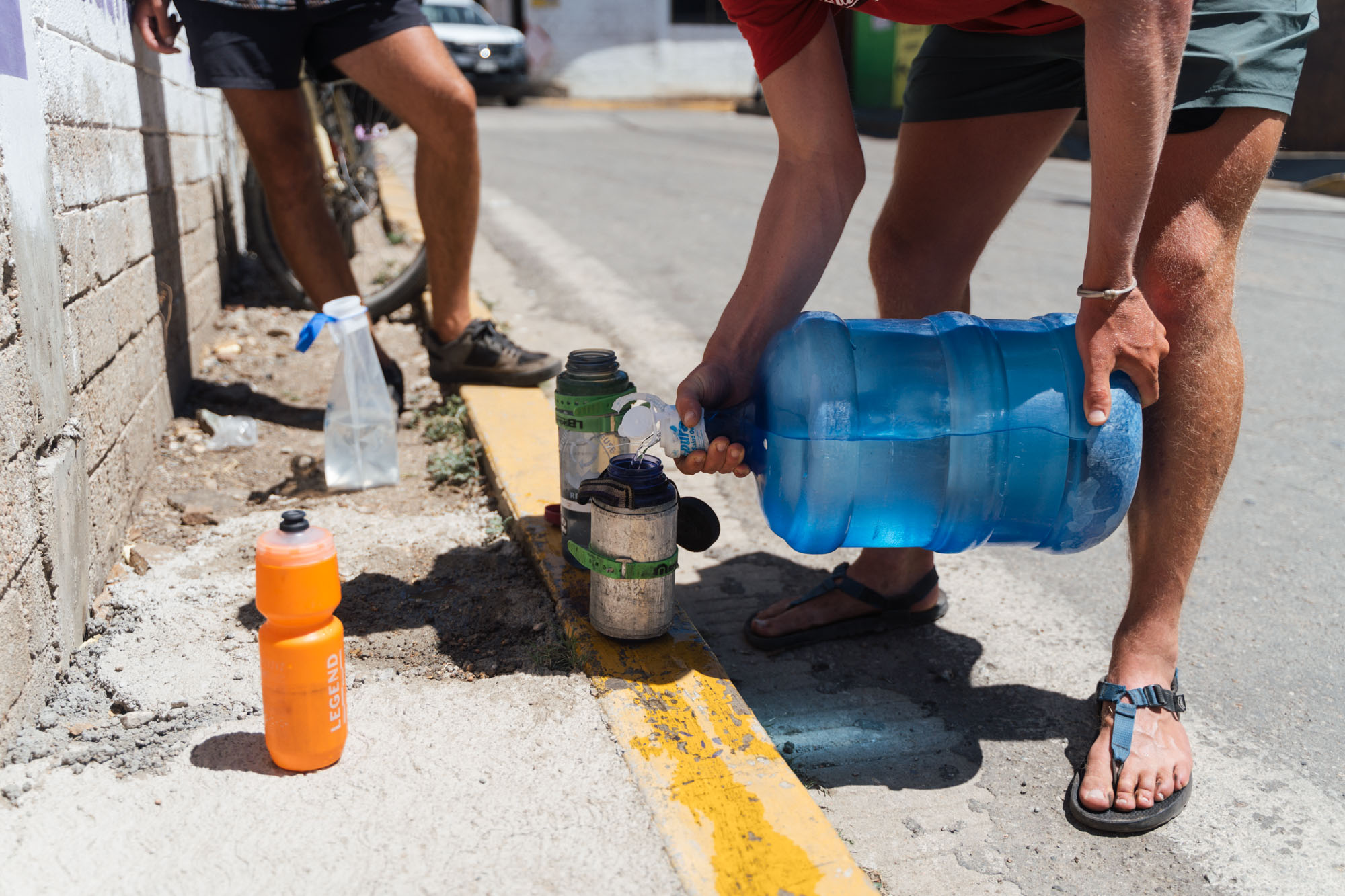
Decanting water from a 20l garrafone into the bottles and bladders you carry is both eco-friendly and economical.
Food Thoughts
- Carry more than you think: Whilst there’s a number of eating options and stores marked on the various route maps, or to be found via Googlemaps, be aware that places change, some are likely to be closed when you pass… or they’ll be poorly stoked… or just have cookies and soft drinks… Ultimately, I’d recommend carrying more than you think you’ll need to the next resupply spot, especially in the way of snacks. Plus, if the terrain proves to be more challenging than you were expecting and progress is slower, you won’t go hangry!
- Dehydrated meals: As mentioned above, it’s easy enough to resupply locally, as long as you have the capacity to carry a couple of days of food and snacks. However, I’d recommend bringing a few dehydrated meals from home too, particularly for mountain routes where resupply options are more limited, and packing light is key. I’ve probably mentioned this before, but rehydration salts like Nuun tablets are highly recommended too.
What bike?
The best bike is the one you have! Still, if you have some choice in the matter, here are some distilled thoughts. For a deeper dive, head on over here.
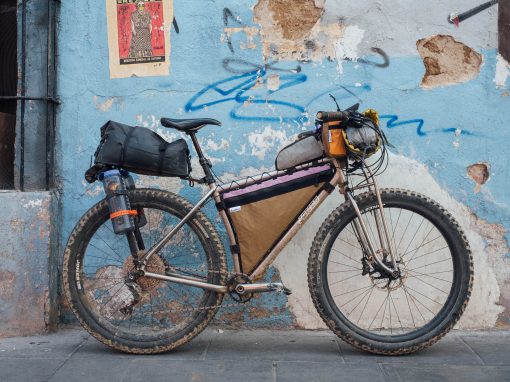
- Mountain bikes: A rigid mountain bike or a hardtail (2.3″ to 2.6″ tyres) is likely your best steed for general riding in Oaxaca, due to the mixed terrain, the extended climbs, and the often steep grades. In short, there’s little you won’t be able to ride confidently if you’re aboard a mountain bike with a wide range drivetrain. Unless you’re hitting the big enduro trails in Ixtepeji, you won’t need more than a 100-130mm suspension fork, if any suspension at all. A drop bar bike with equivalent gearing and tyre size will work too, but I do think a flat bar riding position lends itself to the more technical parts of some of the routes. If you’re riding one of the more singletrack-orientated day rides, a dropper post is highly recommended, as the trails in Oaxaca can be very steep, loose, and rocky.
- For those aboard a gravel bike, I recommend running gearing that is comparable to that of a wide range mtb and the widest tyres your frame will fit (at least 2.1in and ideally 2.3in), and expecting to be jostled around at times. There’s some advice on which rides are better suited to gravel bikes in the routes section.
- If you have an older mtb to hand, fear not. Valley rides are perfect for vintage 26inchers, spares are easy to come by, and the more adventurous pilots can certainly tackle some of the more mellow trails too.
- Gearing: How low can you go? I tend to run 29 x 2.6in tyres for mountain touring in Oaxaca, with a 30t chainring and a 50t cassette. I’m always grateful to have the low gears, and I rarely find myself spinning out at the top end. I’d suggest something similar, in the interests of preserving both your knees and your high spirits.
- Tyres: I’m a big fan of the Vittorio Mezcals for general riding here, and not just because of the name! They tyres are fast rolling, the sidewalls are stout, and they’re long lasting. For mountain biking, however, you’ll want a much more aggressive combo. As an example, my trail bike is shod with a Specialized Butcher up front and a Maxxis Forekaster at the back. Trails can often be steep, loose and rocky, with some rootiness in the high country too.
- Punctures: Due to the number of goatheads and thorns in the area – especially in the valley – a tubeless setup is highly recommended. Sealant in inner tubes can work well too. Otherwise, be sure to bring lots of patches and patience! Sealant is readily available in the shops here… as are patches…
- Just go light: Whatever bike you choose, my main recommendation is to pack light and gear your setup low, as there’s lots of climbing to contend with in Oaxaca. The inclines are sometimes very steep, so expect to hop off your bike and push too.
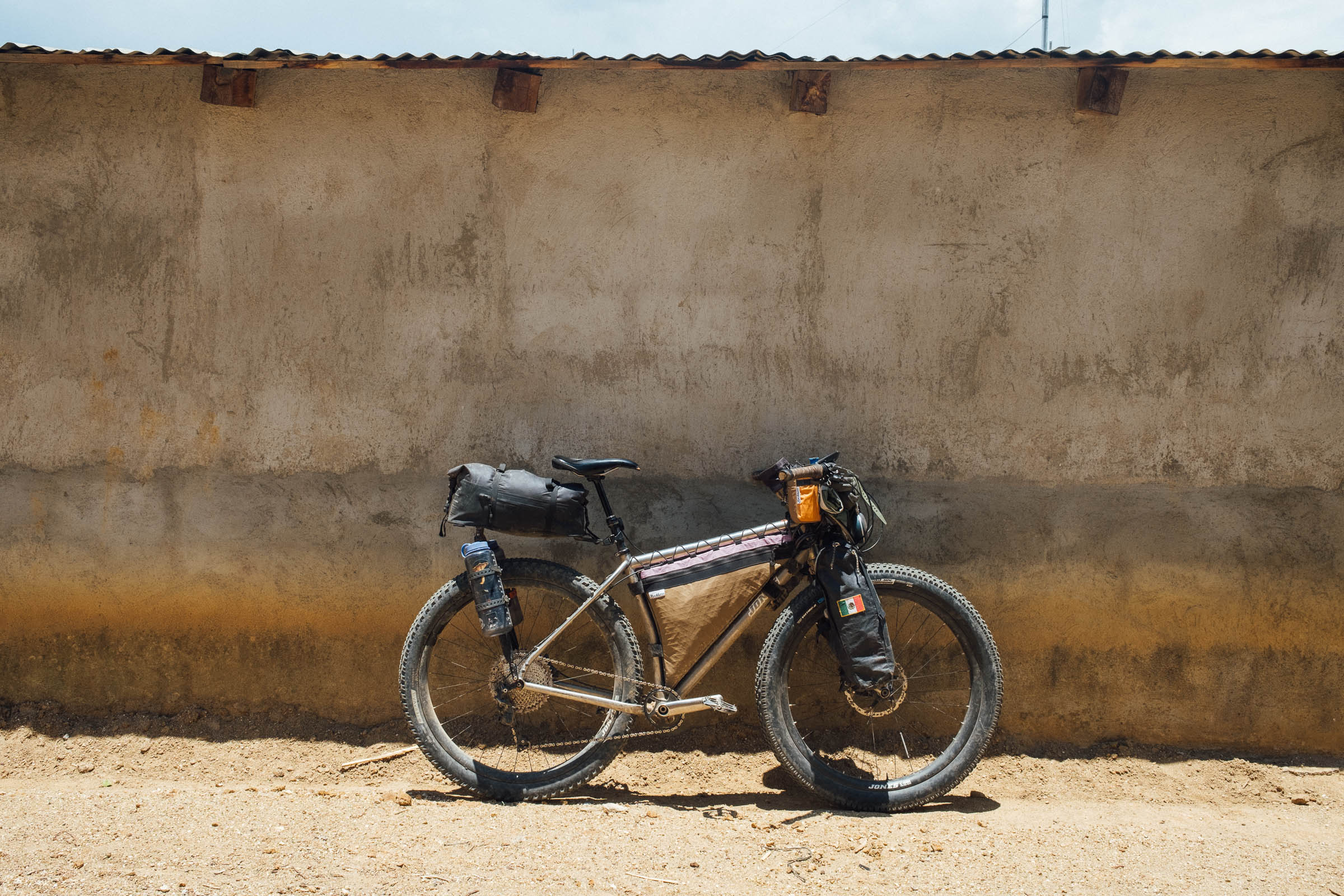


A hardtail is a great option for bikepacking in Oaxaca, as is a rigid mountain bike. And for valley rides especially, a vintage MTB!


Packlists
Packlists are somewhat personal, but feel free to dig into the below to see what works for us.
- For my latest and greatest dry season packlist, see this post!
- For a dialled and minimal solo packlist, check this one out.
- For a more general packlist that I base my own trips on, see this post.
On a budget? You can also get by with relatively basic gear, thoughtful packing, and a simple, well-maintained bike with a suitable gear range. The roads are rarely so remote that you won’t see the odd car or pickup truck trundling by, temperatures aren’t so cold that you need specialist equipment and layers, and in a pinch, you can almost always find a spot to stay if the weather turns against you – so there’s no need to go down an expensive gear rabbit hole if you don’t want to.
Here’s a fun example of a trip I shared with a friend in Ixtepeji, in which he rode a locally purchased bike, ran homemade bags, and carried gear bought from local thrift stores!


Camping and Layering
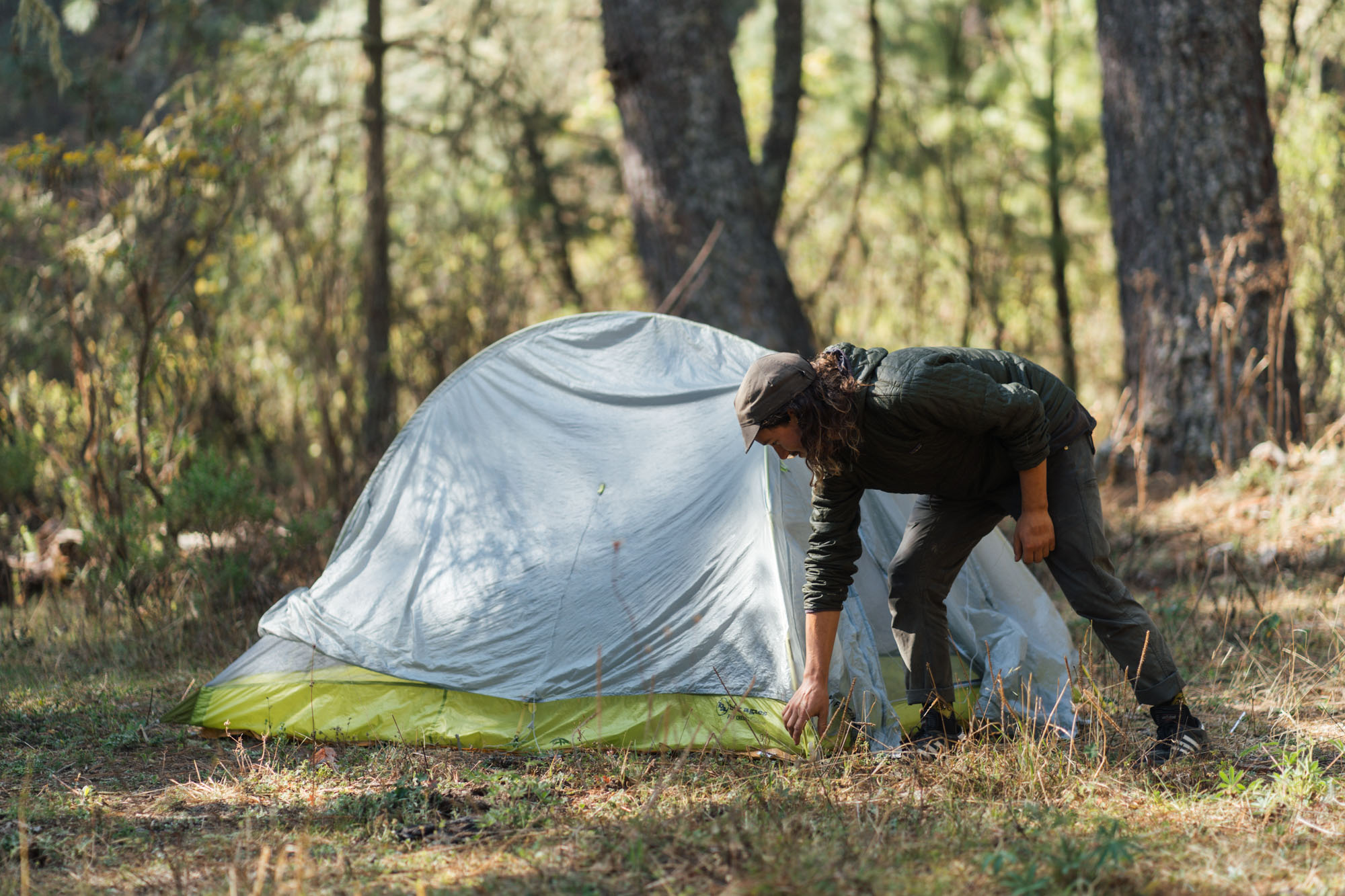
An enclosed tent wards of critters and condensation.
- A number of the routes listed on this site use dispersed, non formal camping suggestions. Be discreet and pitch your tent out of view of the road. Arrive late and leave early. And leave no trace. Never light a fire, particularly in the forest. Always ask for permission if you see anyone, if anyone sees you, or if you’re unsure in any way. I’ve marked which routes use paid camping sites and which use dispersed camping sites on the route page, and which are thus better suited to larger groups of riders.
- A fully enclosed tent is generally preferable in Oaxaca, due to an assortment of critters, black flies, and mosquitoes, depending on the time of year. Even in the dry season, there can be high levels of condensation when camping in the valley, and the mountains are often damp and misty.
- Sleeping bags: Despite the high elevations of the Sierra Norte, it’s rare for temperatures to drop below freezing. This said, it can still feel surprisingly chilly at 3000m, especially if rain is in the forecast, or when the clouds roll in, so I recommend bringing a 0-5c bag and having extra layers on hand, or choosing a -5c bag if you’re a cold sleeper. Packing a sleeping bag liner is useful too – ue it to supplement your sleeping bag when needed, or by itself at lower elevations, particularly as you drop down to the coast and the evenings are humid and balmy. For bikepacking routes that stay in the valleys, you’ll likely be fine with a summer quilt, though there can still be colder snaps, even in the dry season, so a liner is handy to have too. Bear in mind that beautiful woolly hats and socks can be bought locally, which will keep you warm and stylish!
- Spikey things: Given that much of Oaxaca is very much desert-like and abundant in spikey things, a Therm-a-Rest Z-Lite style pad, in addition to your normal sleeping pad, is a great idea. A ground sheet will help protect your pad, and minimise the chance of punctures. Be extra vigilant when you’re prepping your camping spot too!
- Layers: If you’re headed into the mountains, it’s worth packing a puff jacket, preferably synthetic in the rainy season, along with a beanie or woolly hat. Likewise, sleeping thermals are nice to have, if only to ensure you always have a dry layer after a rainy day. Other than that, it’s very much down to personal preference, though anyone who gets cold hands should consider thin gloves.
- Waterproofs: I tend to pack a windbreaker and a light waterproof in the dry season, as occasional storms can roll through, and bring full-on waterproofs in the midst of the rainy season. We find that ponchos work great for around camp, and can double up as bike covers to protect drivetrains from rusting, or as a tent groundsheet.
- Footware: For general touring and day rides in Oaxaca, I’m a big fan of riding in sandals and platform pedals, be it in the dry or season, supplemented with a pair of socks in the mountains. If you’re tackling one of the more techy bikepacking routes, closed shoes are definitely more appropriate, due to all the roots, rocks, and spikey things.
- Stoves and camping fuel: Given that tasty and affordable food is easy to find in Oaxaca, it’s relatively easy to ditch your stove if you prefer to travel light. However, we almost always pack ours for maximum camping vibes, morning coffee, and more flexibility. If you’re running an alcohol stove, ask for alcohol industrial in a tlapaleria, where it’s often available to buy in bulk (approx 40 pesos per litre). Otherwise, hardware stores (ferreterias) can be a good option too. Alternatively, alcohol pura (typically sugar cane, look for the 96° one, often with a red cap) can be found in many pharmacies and tiendas, though it’s a bit more expensive and doesn’t always burn as well – we’ve come across a number of stubborn batches that are probably mislabelled, so test it before you head out on a trip.
- Buying denatured alcohol and compressed camping gas Oaxaca City: We procure our denatured alcohol from a small tlapaleria next to a paleteria behind the Zocalo – find it on googlemaps here. You can buy compressed camping gas bottles at La Gran Montaña, on Miguel Hidalgo. If you’ve forgotten anything at home, this is your place – prices are a bit higher than the US, but there’s a good selection of gear.


Oaxaca is often either toasty hot or it’s raining! Platform pedals and sandals a great choice for dirt road touring here.
Safety in Oaxaca
- Safety whilst bikepacking: Generally speaking, the state of Oaxaca is considered a safe place to travel. However, it’s always important to seek up-to-date information, check in with valley and mountain communities for local issues, and take the usual precautions – be discreet with your money, don’t flash expensive phones or camera around, and camp out of eyesight.
- Solo travel: Plenty of visitors bike tour and day ride solo, but it’s worth pointing out that the very few robberies that I know of have involved solo riders rather than those travelling in pairs or small groups; I’ve marked known instances on the routes post and here. On the whole, Oaxacan mountains bikers tend to prefer to ride in groups.
- Safety in the city: Unfortunately there’s been increasing reports of robberies in and around the city Oaxaca de Juárez, both in the city centre at night and on a few of the local trails during the day. If you’re out late, take a taxi home. In terms of riding, hiking, and running close to the city, be especially mindful in Cerro del Fortín, the cross at Torre de Microondas, and the very top of the Libramento Norte – before the road drops down in Viguera – as used by some of our bikepacking routes and day rides into the Etla Valley. Ride in a group if you can, keep an eye out, and don’t linger. Find a map of these areas and other important recommendations pertaining to safety here.
- Bike theft: Theft is rarely an issue in the pueblos and I personally don’t carry a lock on my trips here, though you migth consider bringing something small and light as a deterent. At most, I’ll lash our bikes together at camp, or make them awkward and noisy to grab in the night. Out on the road, most restaurants are amendable to bikes being brought inside and you’ll generally find a secure spot within hotels. In the city, however, it’s bicycle theft is becoming more of a problem. I’d recommend leaving your bike in your hotel and walking around the city when you can.
- What out for topes! Aka speedbumps. Mexico has more speedbumps per head than anywhere I’ve ever cycled, and some of them are very steep! They can sneak up in the shadows and throw you off your bike, especially if you’re distracted. The inverted tope is a more rare breed, but arguably more lethal as they’re harder still to see…
- Driving: I’m relatively critical of drivers in general and I’d say Mexican drivers are more patient than most, at least when caught behind you on a narrow countryside road. However, Oaxaca city drivers are very distracted and more impatient, prone to leaving indicators on for no clear reason, or even using hazard lights to announce the intention of doing ‘something’. Could be a turn, could be a full stop… so be prepared!
- Dogs: Mexico is overrun with street dogs and you can expect to find them loitering and lounging in the shade in Oaxacan towns and villages. Most are relatively mellow, especially in the heat of the day, but there are invariably a number that like nothing more than to take up chase, some more aggressively than others. To fend them off, we’ve found the best practice is to either stop, pick up a rock, and pretend to throw it, or make a sharp, loud ‘tzztzztzz’ sound. This is what the locals do and it often stops them in their tracks. Note that some are more vocal than others at night, so bring earplugs when camping!
- If you get bitten: Although very rare, we’ve heard of a few bikepackers who have been bitten by street dogs. Clean the wound well with soapy water or iodine, and bandage it to keep it free of dirt, especially if you’re out on a trip. We recommend going to a pharmacy as soon as you can and explaining the situation – they will likely suggest a short course of antibiotics. Alternatively, many towns have health centres that you can visit for a small fee. Thankfully, there hasn’t been a case of canine rabies for a number of years – see this article for more details – but if in any doubt, consider taking post exposure treatment nonetheless.
- If you’re a dog lover and would like to help out, there are a number of dog shelters in the area, including Caravana Canina and Friends of Megan, both of which can help with the logistics of adopting an Oaxacan dog. If you’d like to help financially, you can also take part in Caravana Canina’s hikes with rescue dogs, in conjunction with Coyote tours.
- Bugs and snakes: As dengue is increasingly prevalent in Oaxaca, consider bringing mosquito repellent. There are black flies too, and occasionally poison ivy, so pack Benadryl if you’re sensitive to these. There are also lots of scorpions and we’ve spotted a number of brown recluse and black widow spiders, as well as rattlesnakes and corral snakes, so an enclosed tent is recommended.
Money Matters
- Note that different ATMs have different charges when withdrawing money. Santander or HSBC tends to be the lowest, and it’s generally best to decline the bank’s conversation rate, too.
- Within the city, you can often pay contactless, especially at the more expensive resaurants. I transfer money into a Wise account to minimise bank charges.
- Try and break 500 peso notes into small bills in one of Oaxaca’s banks, or a supermarket, before heading into the backcountry, as small stores and restaurants will have trouble changing them.
- Generally speaking, bring enough cash with you on a bike tour. Beyond towns like Ocotlán and Mitla, ATMs that work with international banks are few and far between, and sometimes they run out or are broken.
Accommodation in Oaxaca de Juárez
- I don’t have any particular recommendations for places to stay, as there are so many, and it’s very dependent on personal budget and the time of year that you are visiting – places get especially busy around the main holidays, like Dia de los Muertos, Christmas, and Easter. However, Booking.com is a good place to start looking, as most places are listed there. Jalatlaco is a popular touristy area that’s very centrally located and Xochimilco makes another colourful base, that’s just a little further out. if you intend to stay longer and prefer to be away from the main hubub, Las Cascadas, Los Volcanes, San Felipe del Agua, and Guadeloupe Victoria are good options. For longer term options, Facebook seems to be the best option, or negotiating a longer let with an Air B&B host.


Getting to Oaxaca by bus and by plane
- Flights: Volaris, AeroMexico, and a number of other airlines fly to Oaxaca via Mexico City or Guadalajara. There are some direct flights from LA and Dallas, too. In the past, we’ve found choosing connecting flights where there’s some leeway between them to be the best option, particularly when flying with bikes – I think it’s a good idea to pop an Air Tag or similar in your box, just in case your bike doesn’t make it onto the same flight. Airlines invariably have different bike policies in terms of cost/size/weight, so always check ahead. I like to travel with a compact bicycle bag – my favourite is the Tardis from Ground Effect – as it fits into smaller taxis and is easier to store in a hotel or hostel while you’re out on a trip.
- Transportation to and from the airport: Depending on the size of your bike box or bag, it’s likely to cost between 350 and 500 pesos for a taxi from the airport into town. You can buy tickets (cash or card) for the official airport taxis when you arrive (the office is just by the exit) and it’s all regulated – you’ll either be charged for Zone 1 or Zone 2, depending on your hotel. There’s no Uber in Oaxaca, and Didi (see below) isn’t allowed to pick up travelers from the airport. If you have a compact bike bag, you might well be able to fit it into one of the collectivo minibuses, which drop its passengers off at their various destinations (140-160 pesos per person, depending on the zone). If you have a number of big bike boxes, you’ll be assigned a minibus-style taxi, and it will cost more. Note that there are ATMs at the airport – we find Santander the most reliable. For your return, download the Didi App on your phone and book a taxi (you can pay the driver in cash directly, which is preferred, or by card). These are the yellow taxis that you see around town – most drivers are fairly creative and can fit a bike bag/box or two, depending on their sizes. A standard taxi back to the airport tends to cost around 200-230 pesos, depending on the time of day. Otherwise, arrange a shuttle through your hotel, guesthouse, or Air B&B. To arrange a van suitable for larger numbers of riders with big boxes, Taxi Oaxaca may be able to help (+52 1 951 200 6878).
- Bus from Mexico City: Oaxaca is a six-hour bus ride away from Mexico City. ADO is a recommended bus company and the station is right in town. If you’re taking a night bus, treat yourself to the Platinum service for maximum shut eye. There’s generally plenty of room for a bike or two. We remove the front wheel and drop the seat post to make our bikes as compact as possible, and easier to store upways. The views are great if you go by day (the route crosses the Reserva de la Biósfera Tehuacán-Cuicatlán) but consider a night bus for more efficient use of your time, and less traffic too.


Health
- If you hurt yourself, Hospital Reforma, just a few blocks away from Santo Domingo, is a good private hospital that works with insurance companies like AXA. Even if you’re paying out of pocket, the prices are reasonable. If it’s something minor, there are a number of small clinics that offer very affordable care across the city. We’ve had good experiences visiting the Centro de Salud in Xochimilco (59 Dr. Gilberto Bolaños Cacho).
A.J. Kamish
12 September 2023 at 6:10 pm
Hey Cass – I’ll be riding the Grand Dirt Tour route (with an add-on down to Zipolite on the coast) in November and we’re stoked!
I’m seeking some insight about temps/sleeping bags if you wouldn’t mind sharing some insight.
Looking at weather averages would have me believe that it doesn’t get too cool at night, even higher up in places like San Jose del Pacifico and throughout the mountainous parts of the route. I’d like to get by with a super light and small 50 degree bag… but I’m skeptical with elevation.
Any thoughts on temps and the right sleeping bag rating for this route in November?
Thanks!
Cass
18 September 2023 at 10:26 am
Hi A J. That route doesn’t stay up in the mountains for too long, so you can likely get by with a lightweight summer quilt and sleeping in your clothes if needed – or buying some additional warm socks (bought locally in San Jose del Pacifico!). Otherwise, a thin silk liner can be useful, as it can double up for sleeping at lower elevations, too.
This said, my favourite riding in the area is the Sierra Norte, so if you end up heading into the mountains for a longer period of time, I think it’s worth having a bag/quilt that will comfortably take you down to around 5c. Although it can get chilly up at 3000m, it rarely drops below freezing.
Pingback
Matthew
31 May 2025 at 3:55 pm
I’ll be traveling down in Nov and would love to do some day rides out of the city, where do you recommend I rent a bike? Preferably drop bar gravel bike. I’m 6’4” and need an XL frame… Salud!
Cass
31 May 2025 at 5:35 pm
hey! I pretty much have everything I know on this blog! there’s actually a drop down menu for rentals, and you can find the post here:
https://stilloutriding.com/2023/12/bike-shops-rentals-and-shuttles-in-oaxaca/
That said, Oaxaca doesn’t have the kind of infrastructure you’re perhaps imagining for rentals, so it’s very unlikely you’ll find a 1/gravel bike and 2/size XL frame. But drop the businesses I’ve linked to a message, because you never know!
I think a hardtail, fully rigid MTB, or lower geared gravel bike (with the biggest tyres you can fit) is perfect for the terrain if you want to get off the beaten track, should you end up bringing your own bike!
Andy
12 September 2026 at 5:14 pm
Hello, I am headed to Oaxaca last week of January and first week of February 2027. I’ll be doing language classes in the mornings and then riding in the afternoons. I am looking at bringing my gravel bike with 40mm semi-slicks so I can ride both road and dirt/gravel. How is the riding in Oaxaca these days?
Cass
14 September 2026 at 9:02 am
I’m no longer based in Oaxaca, but I’m sure the riding is as enjoyable as ever!
I personally find a bike with larger tyres more suited to mixed Oaxacan riding conditions, if you have that option.